Designed to feel obvious, not enterprise-heavy.
Most small businesses end up stitching together a spreadsheet, a separate POS app, a WhatsApp group for approvals, and an accountant who reconciles it all at month-end. YENU ERP replaces that whole patchwork with one system — every module below shares the same customers, items, ledger and numbering, so nothing has to be re-entered twice.
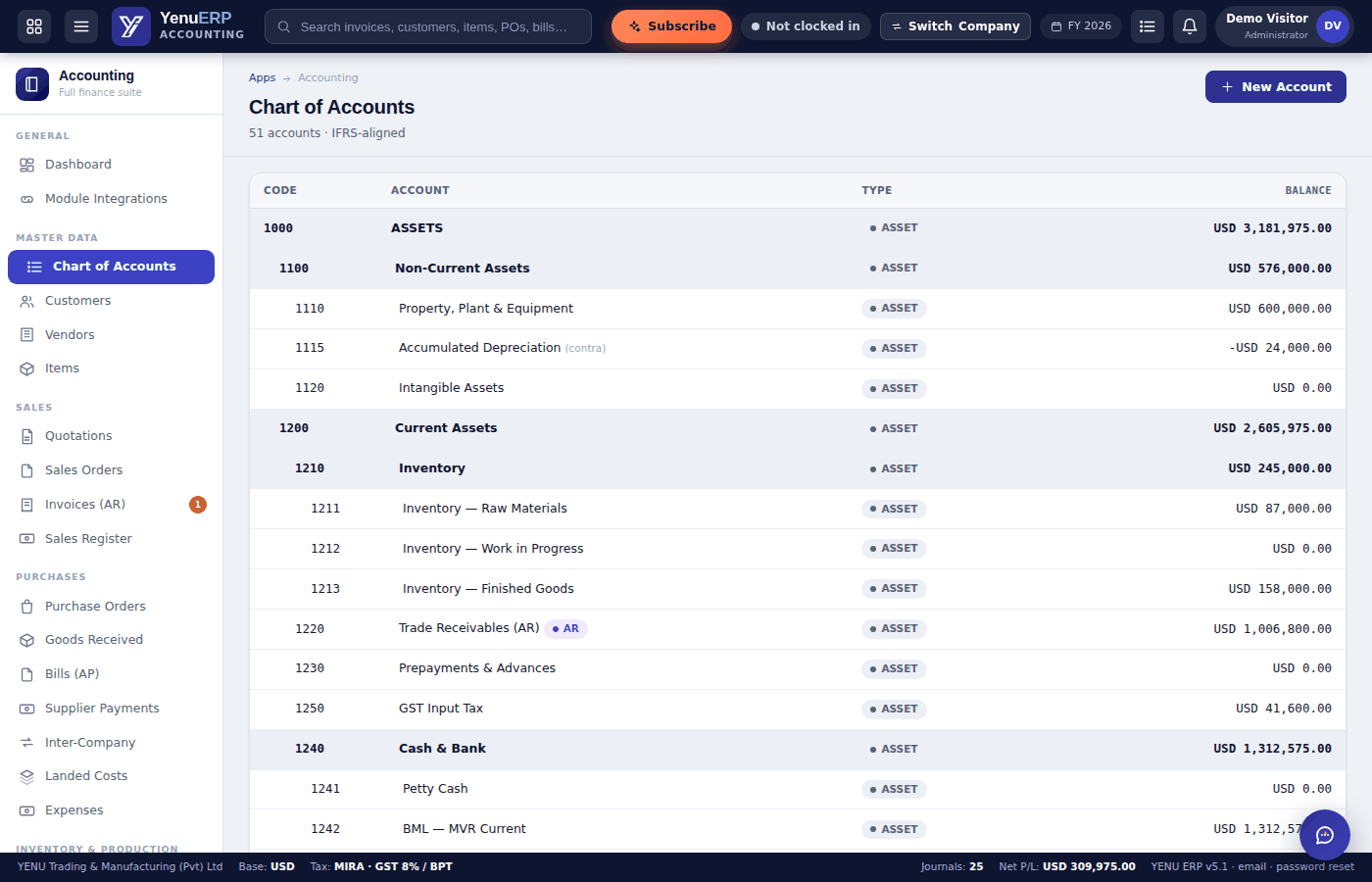
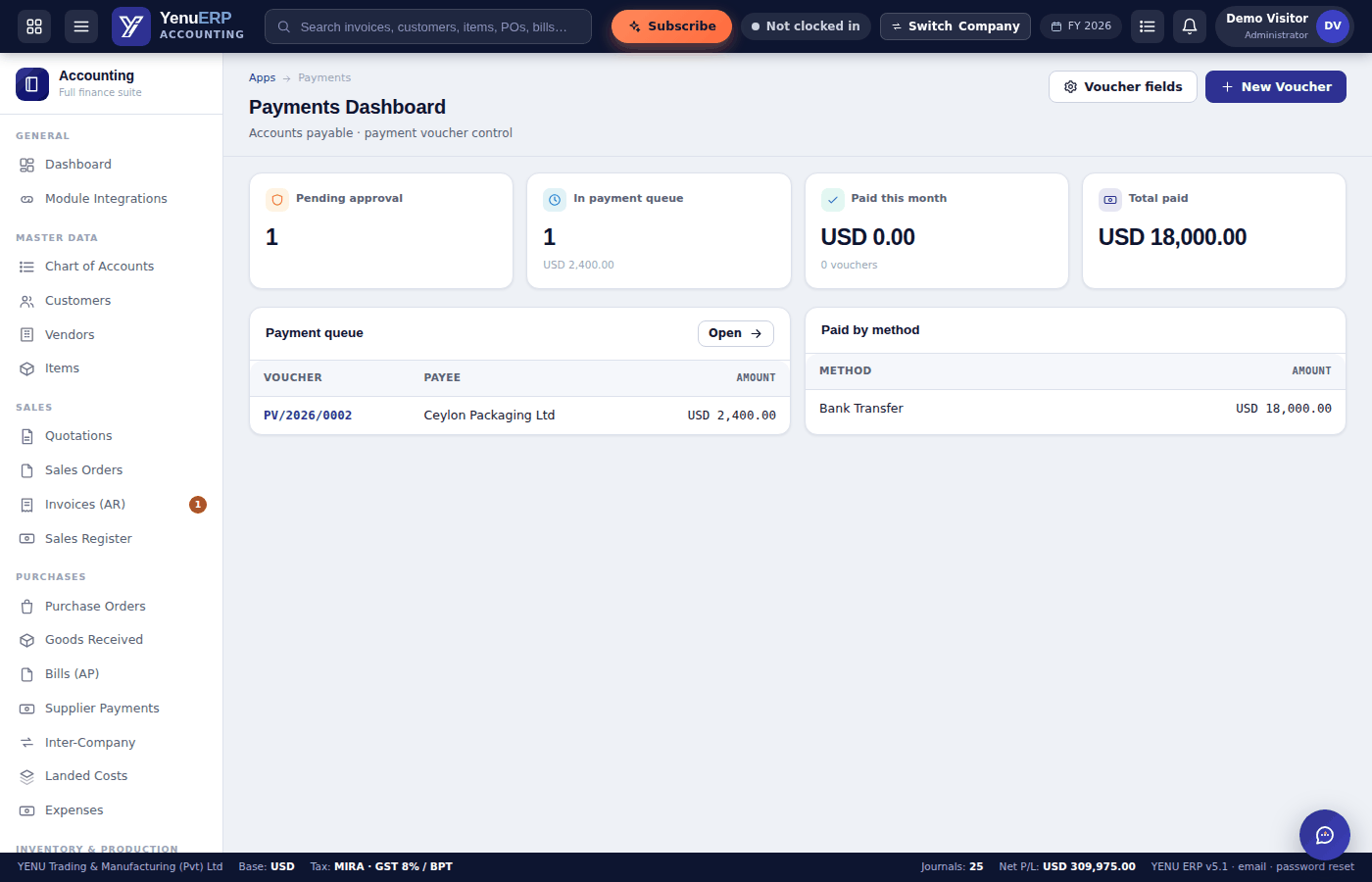
A real double-entry ledger underneath everything else — journal entries, payment vouchers with an approval chain, bank & cash accounts, credit/debit memos, and a Chart of Accounts you can organise however makes sense for your business (nest ledgers as deep as you like — e.g. Expenses → Admin Expenses → Telephone).
Why it matters: most small businesses only find out they've got a cash flow problem when it's already happened. A live, balanced ledger means you always know where you stand — not just at year-end when the accountant calls.
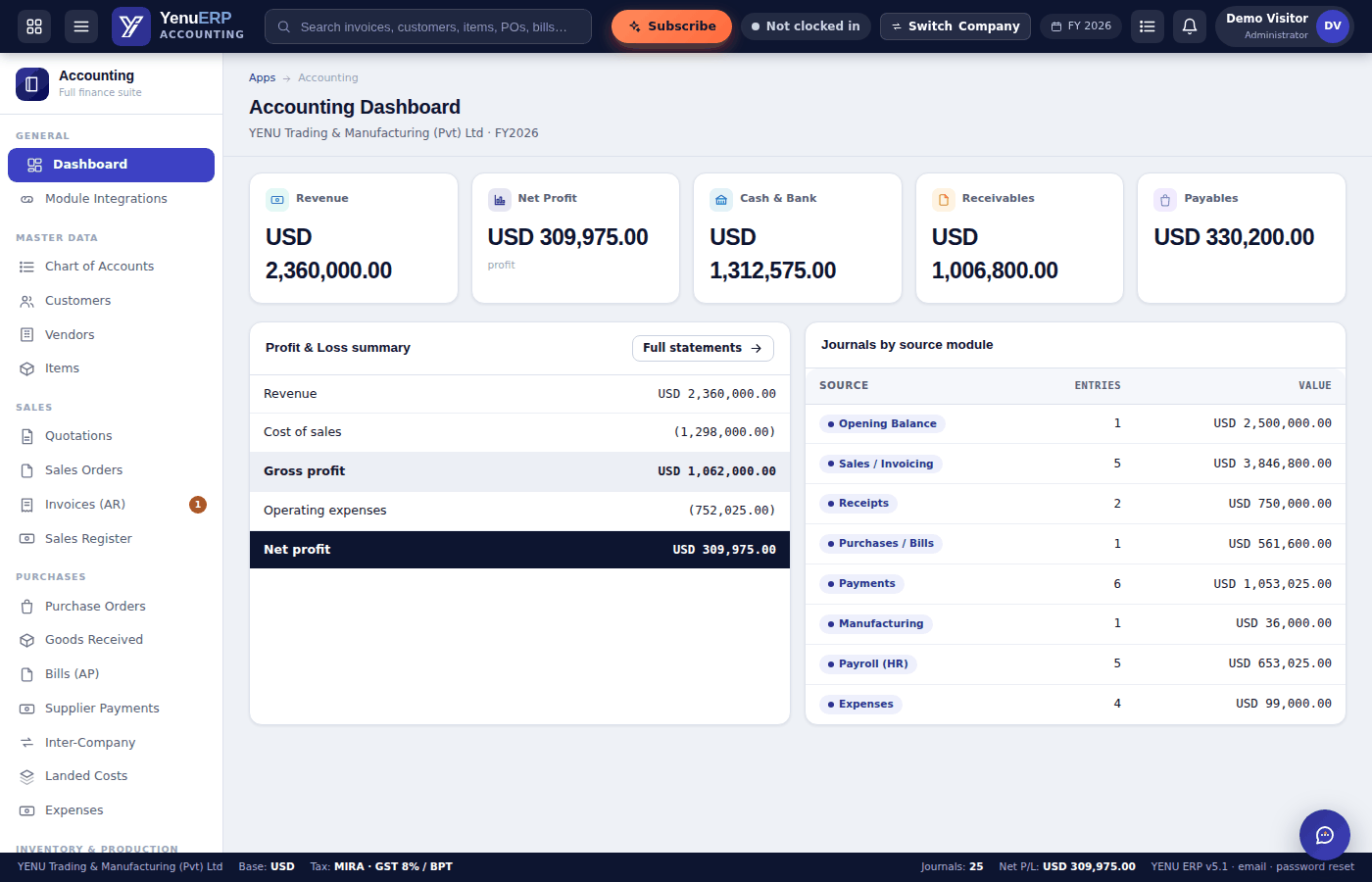
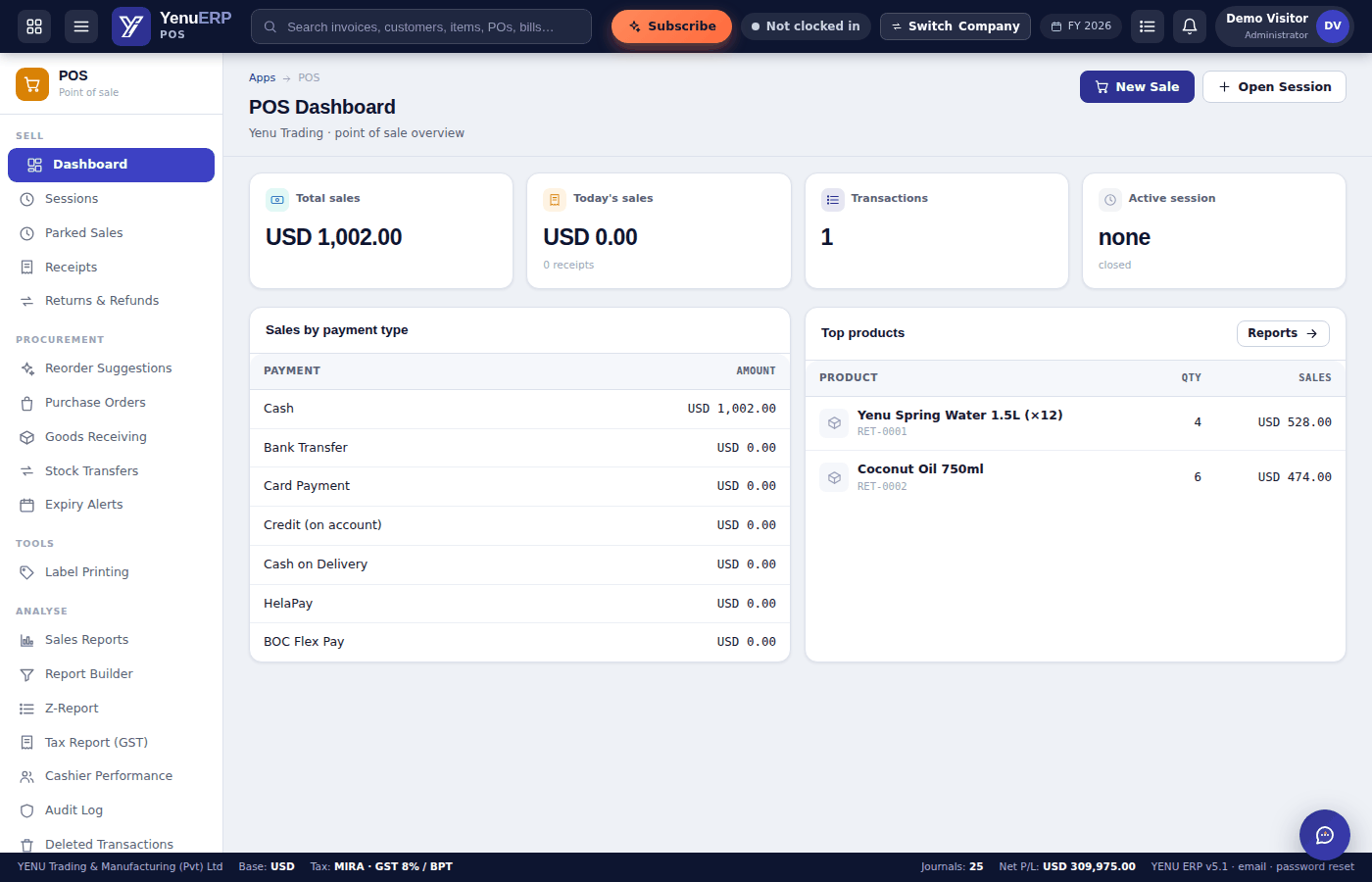
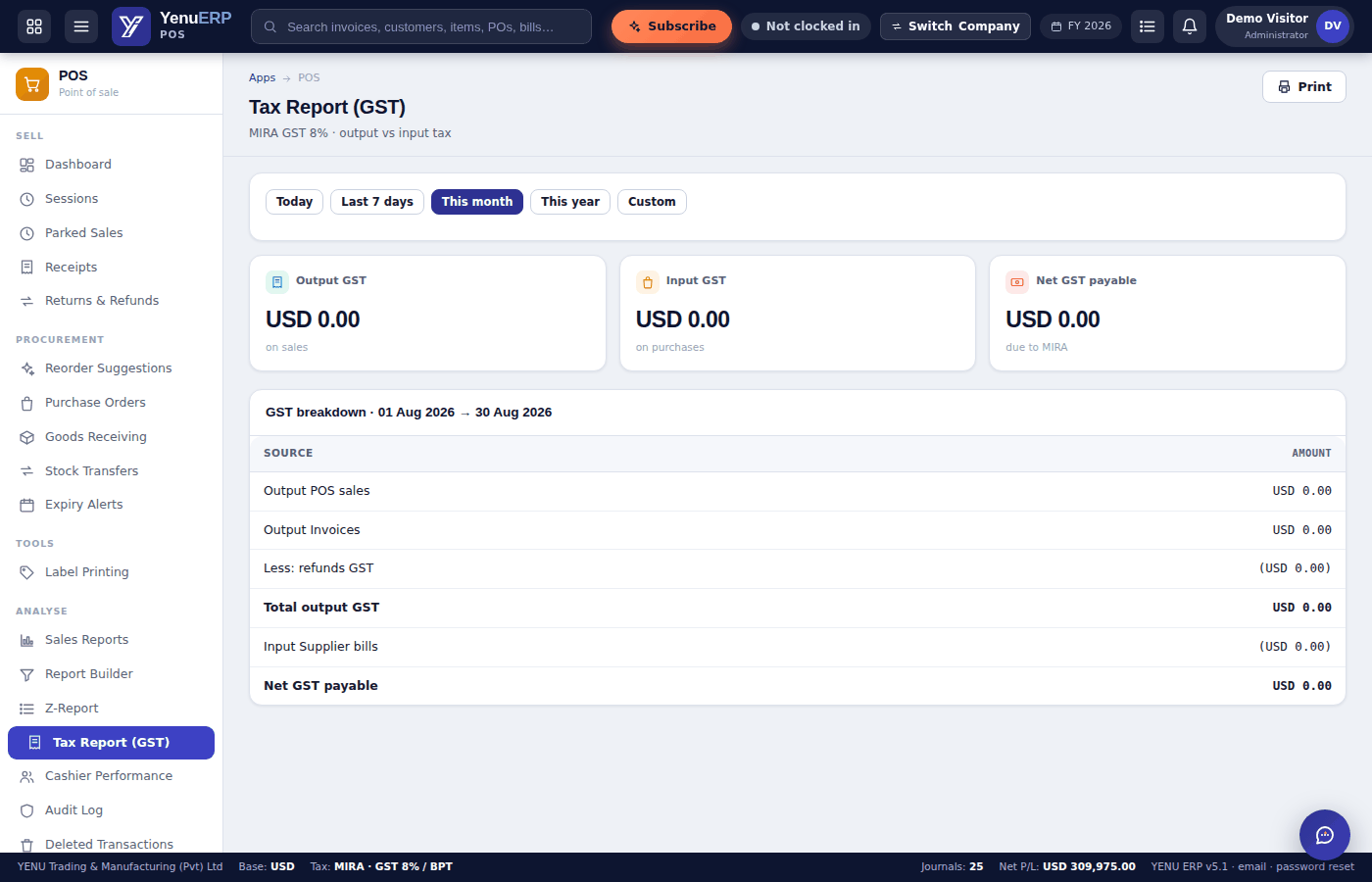
A fast checkout screen for shops and counters — sessions, receipts, returns & refunds, Z-reports, cashier performance, and GST/VAT tax reports built in.
Why it matters: the sale rings up in the same system that runs your books and stock — no separate till app, no manual end-of-day re-entry, no gap between what the cashier sold and what accounting sees.
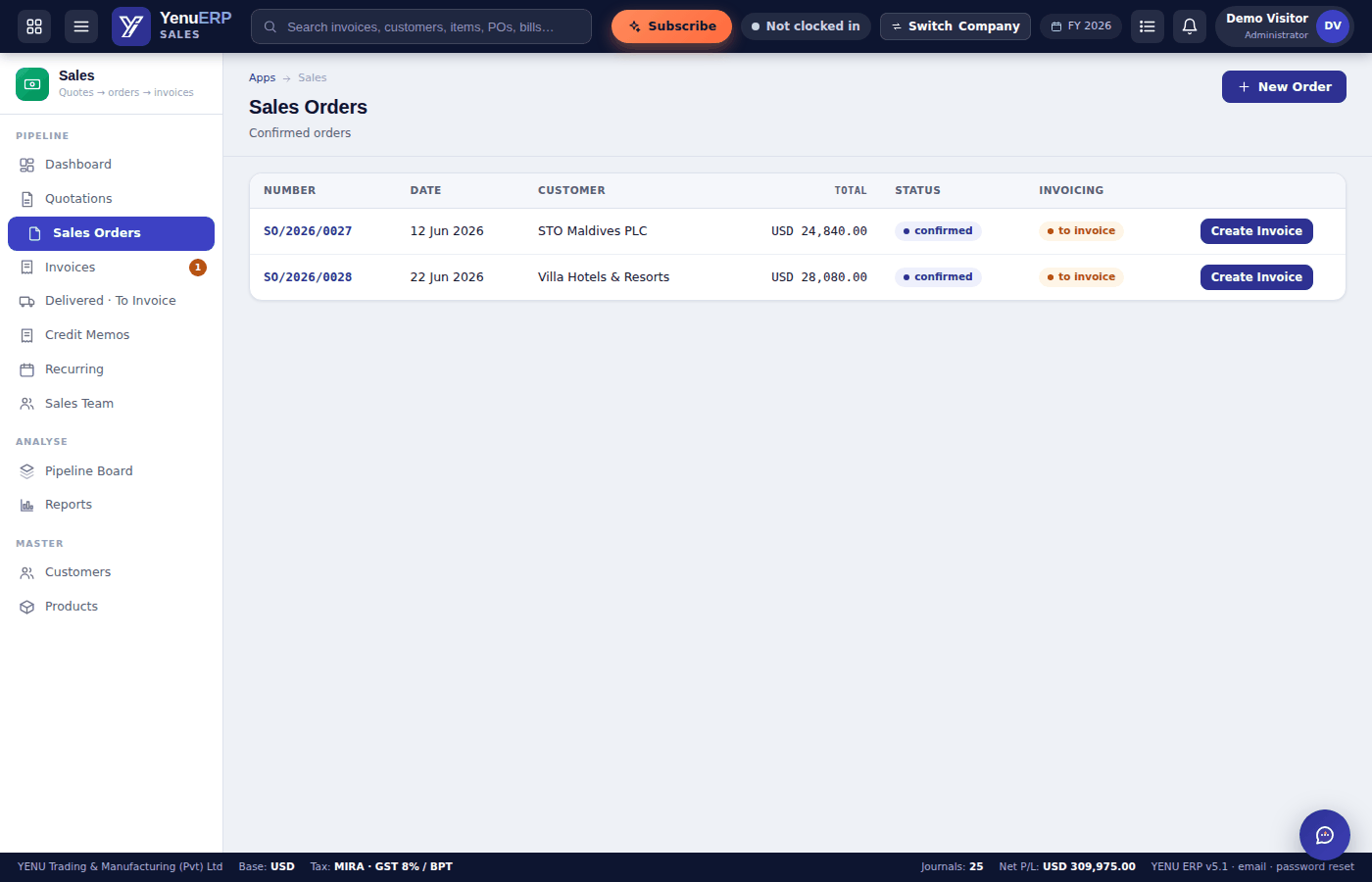
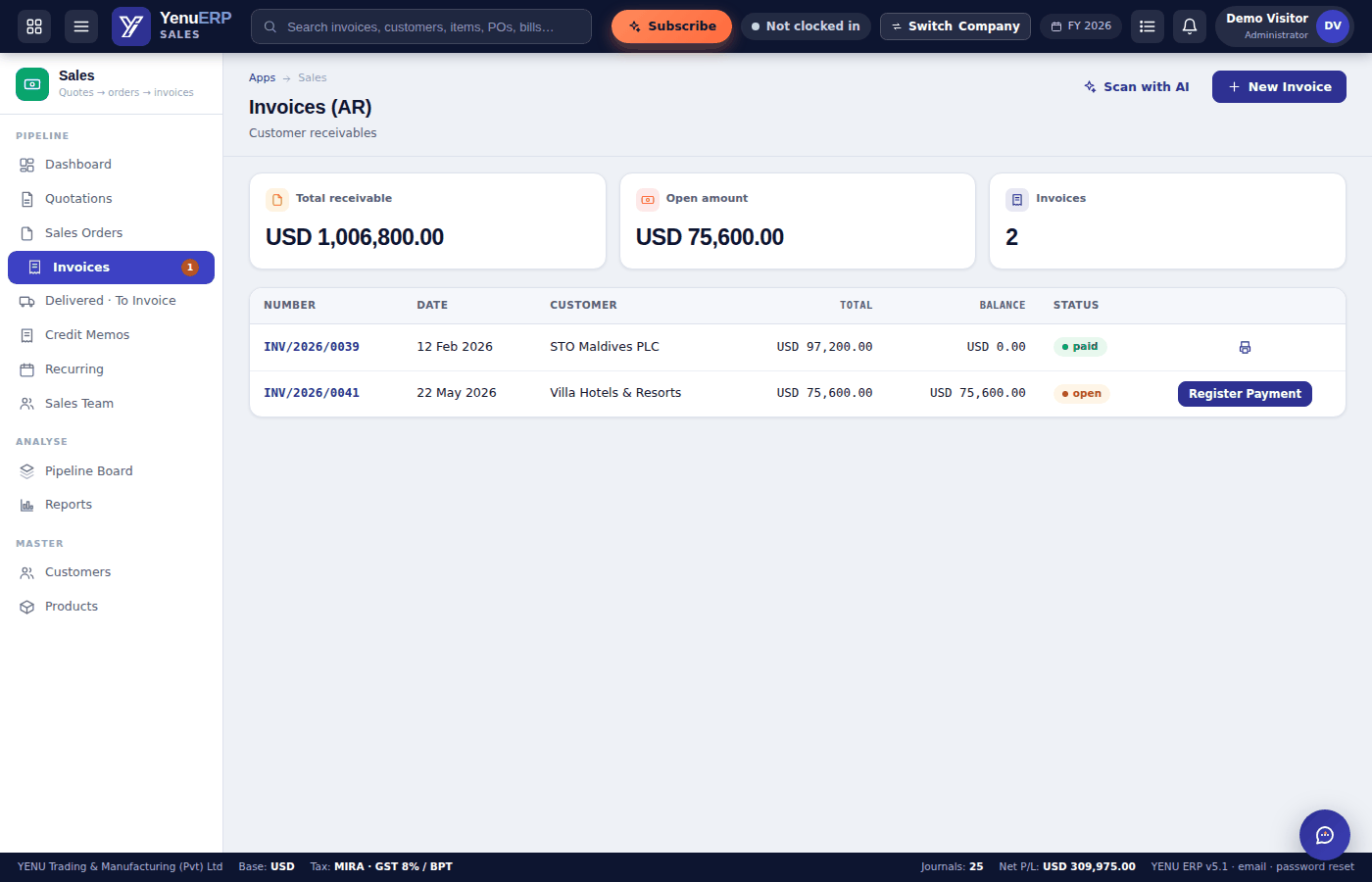
Quotations → Sales Orders → Invoices, with customer records, price lists and sales reporting along the way.
Why it matters: a quote that turns into an order that turns into an invoice — without retyping the customer, the items, or the prices three separate times.
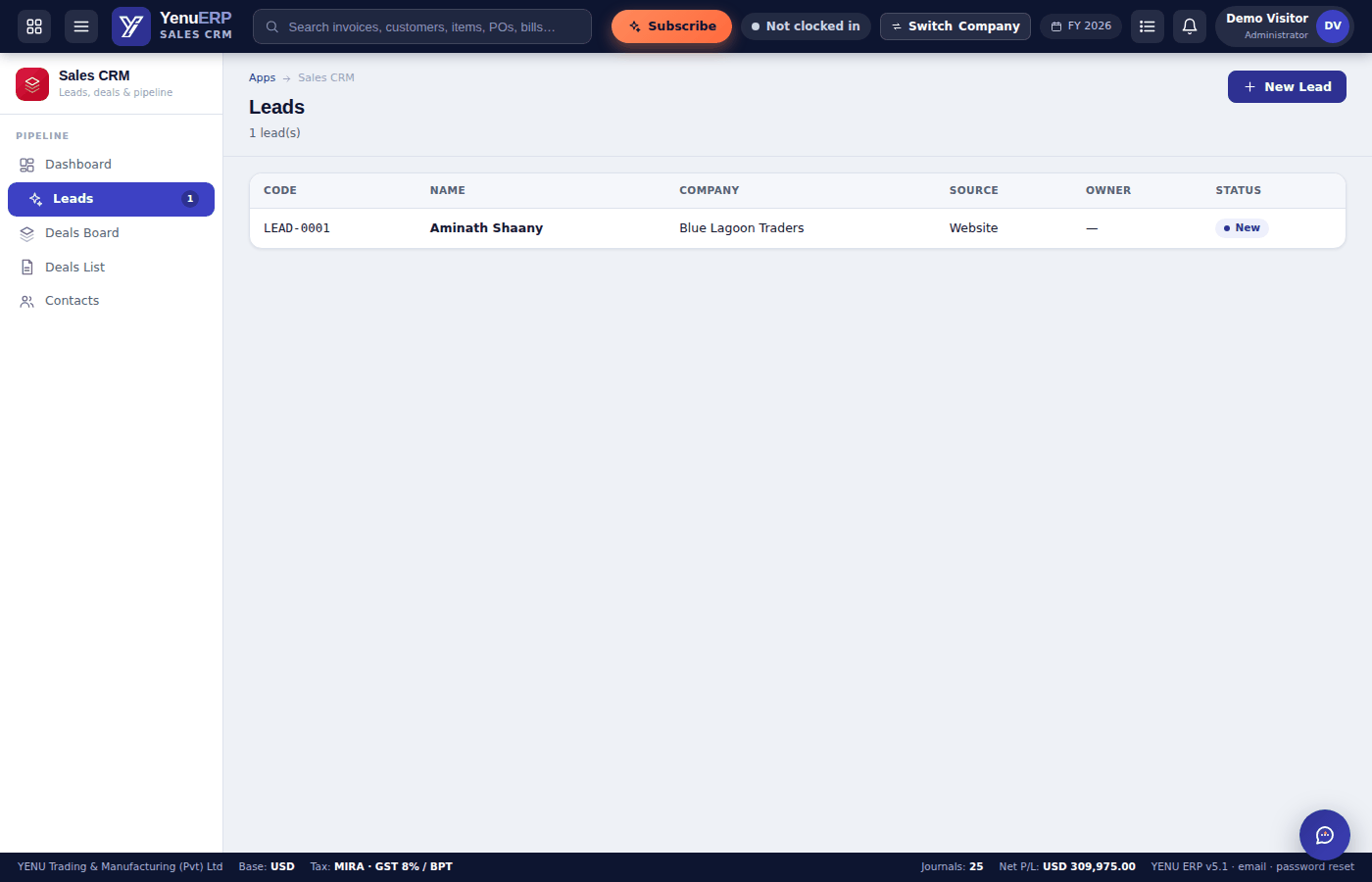
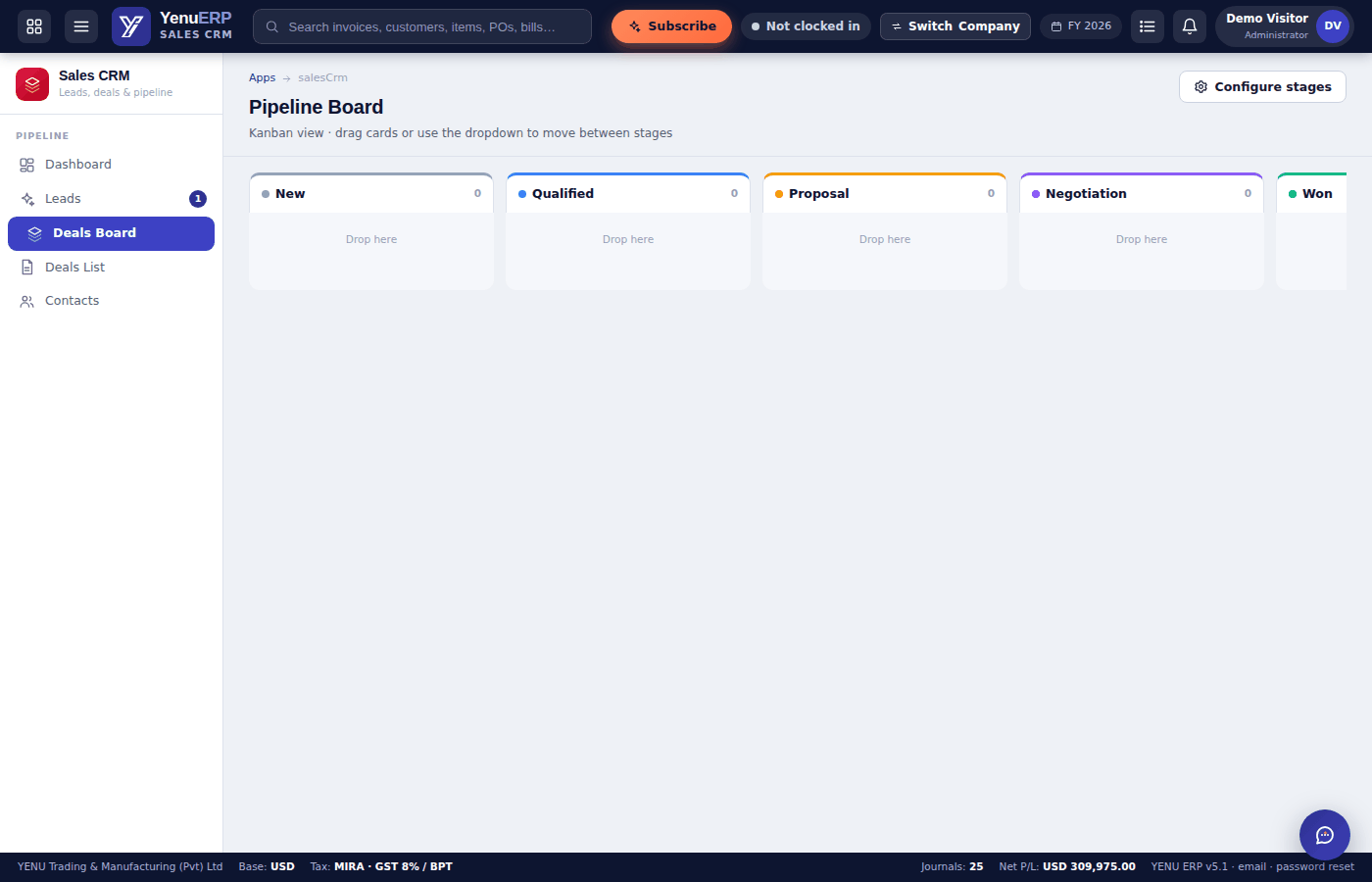
Leads captured before they're even a customer, a visual deals pipeline by stage, weighted forecasting, and an activity timeline for every call, meeting and note.
Why it matters: a won deal hands off straight into the Sales module's quotation flow — the pipeline you managed the relationship in is the same system that bills it.
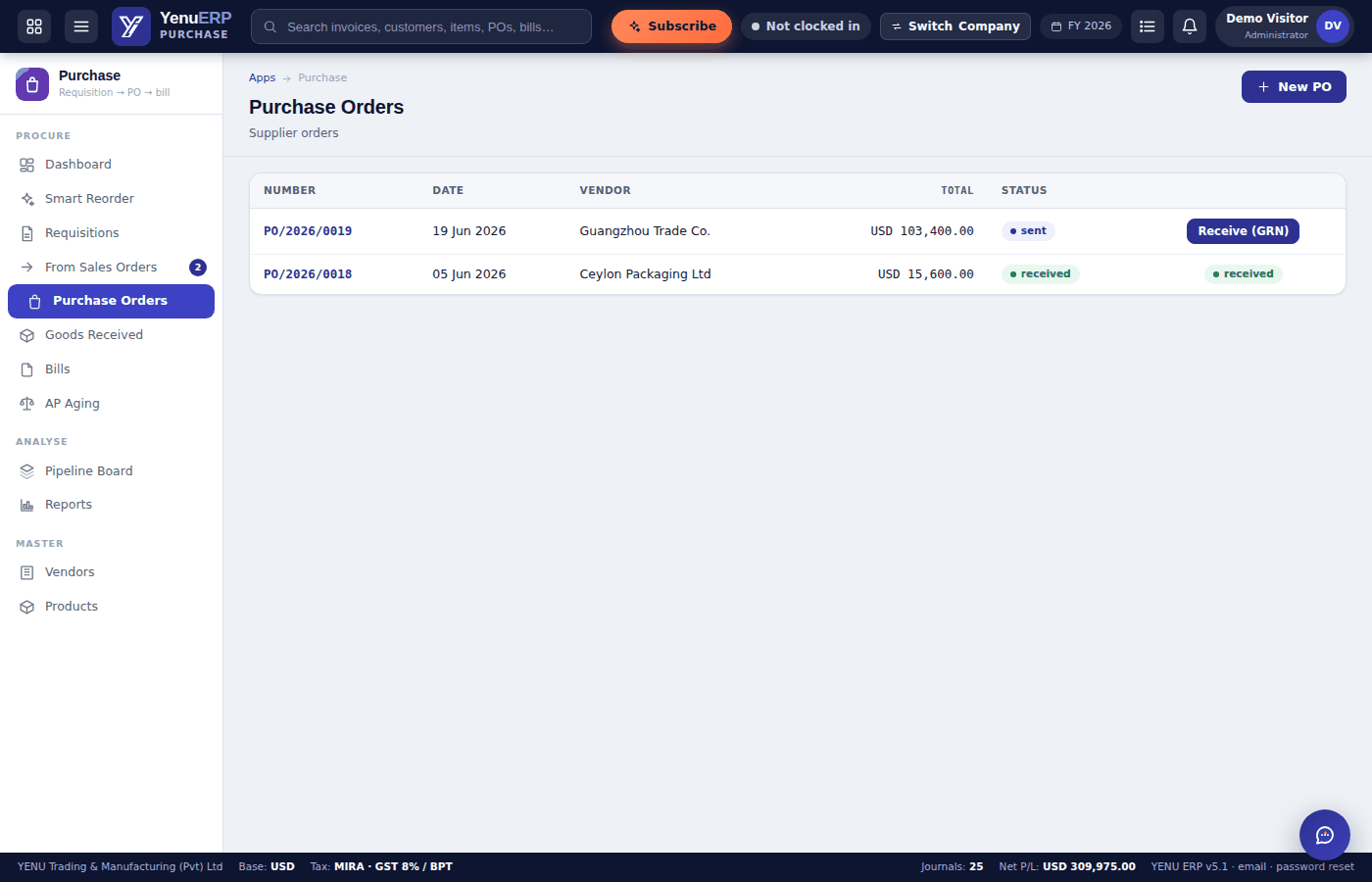
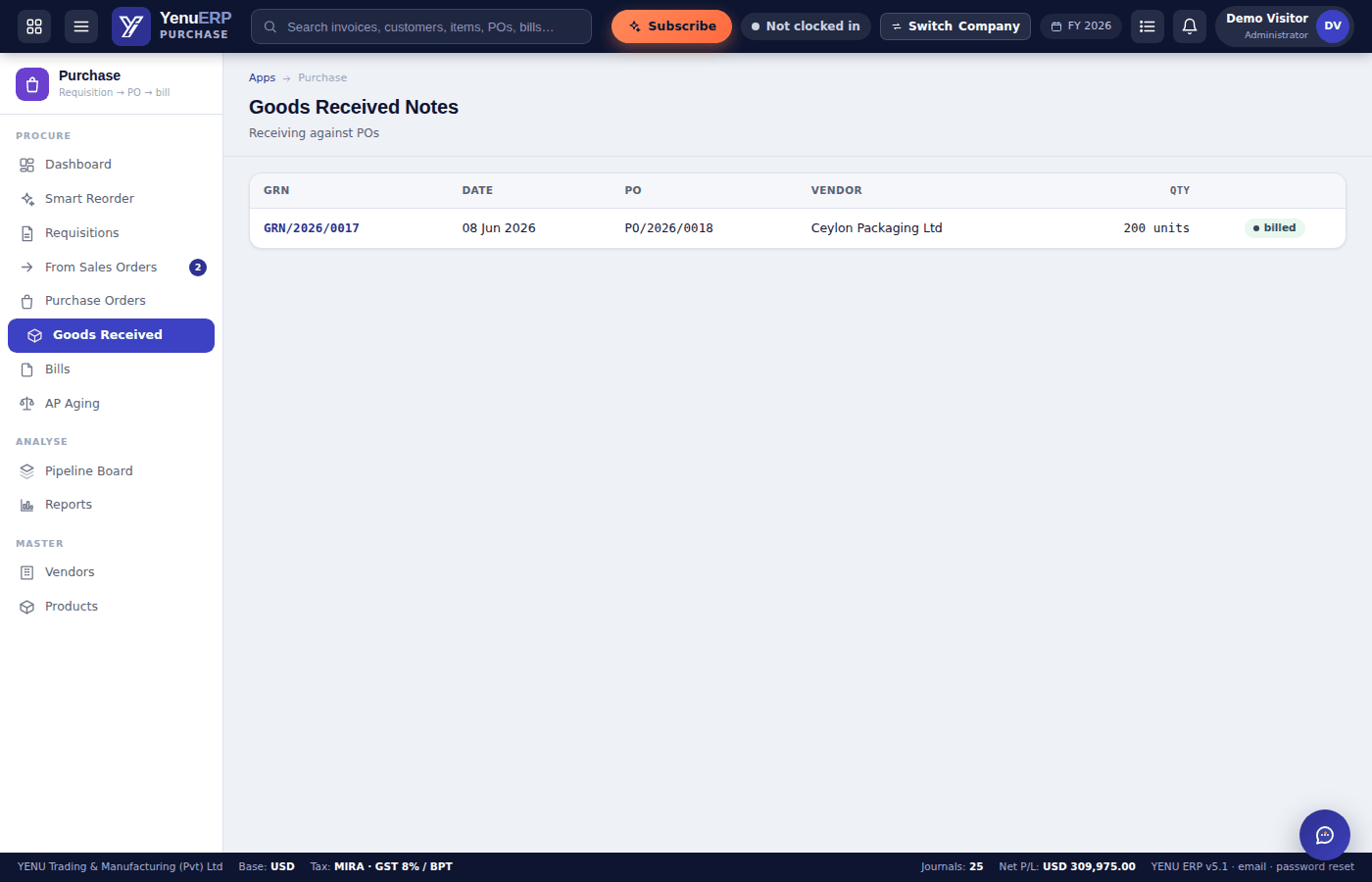
Purchase Requisitions → Purchase Orders → Goods Receiving → Bills, vendor management, and smart reorder suggestions based on real sales history.
Why it matters: stops the two most common purchasing mistakes — reordering stock you don't actually need, and running out of stock you do.
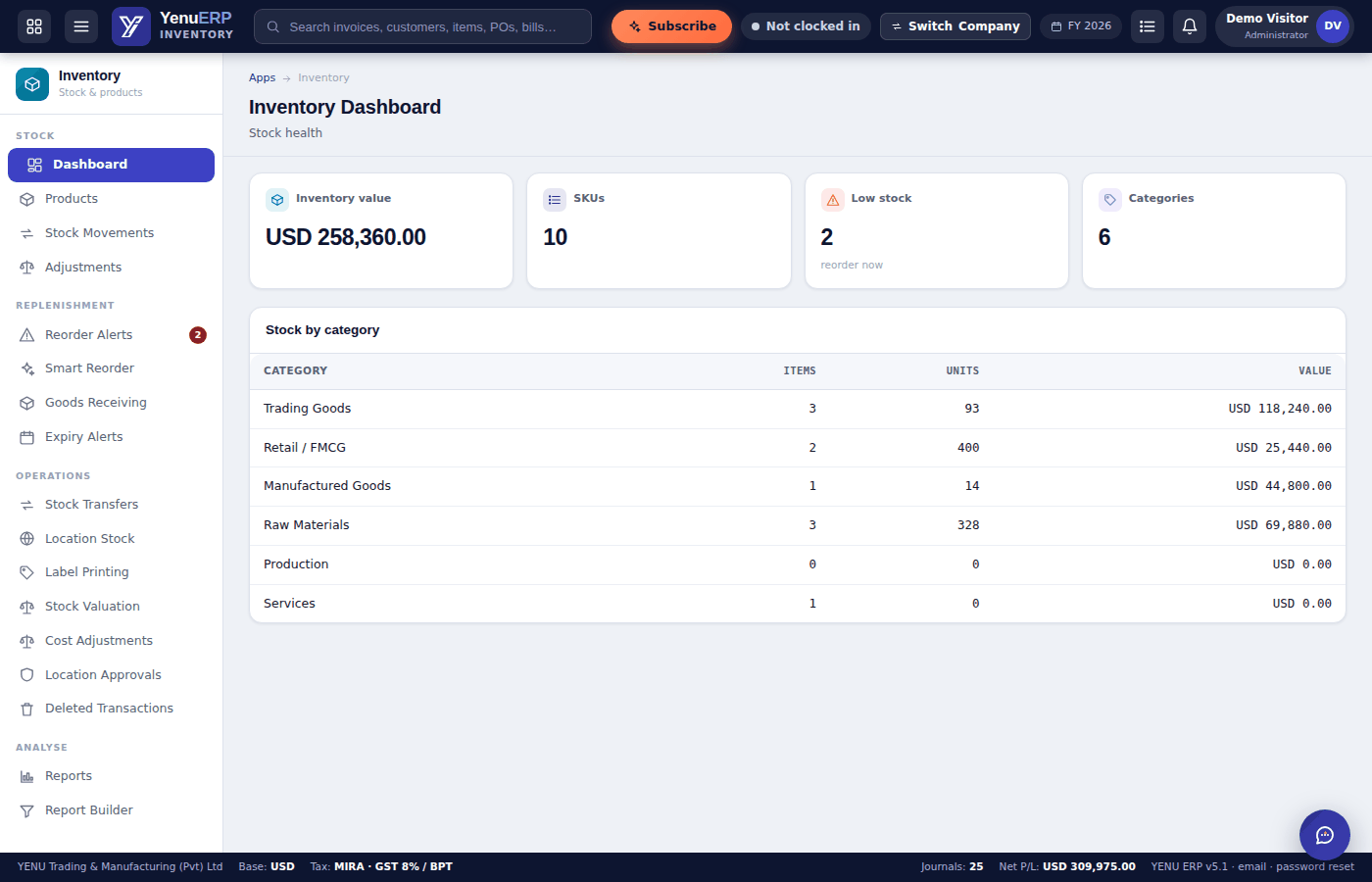
Stock by location, transfers between branches, expiry alerts, item categories (which set default GL accounts and auto-numbering), and barcode label printing.
Why it matters: if you sell from more than one location, "how much stock do we actually have" is usually a phone-call-and-guess. Here it's one screen.
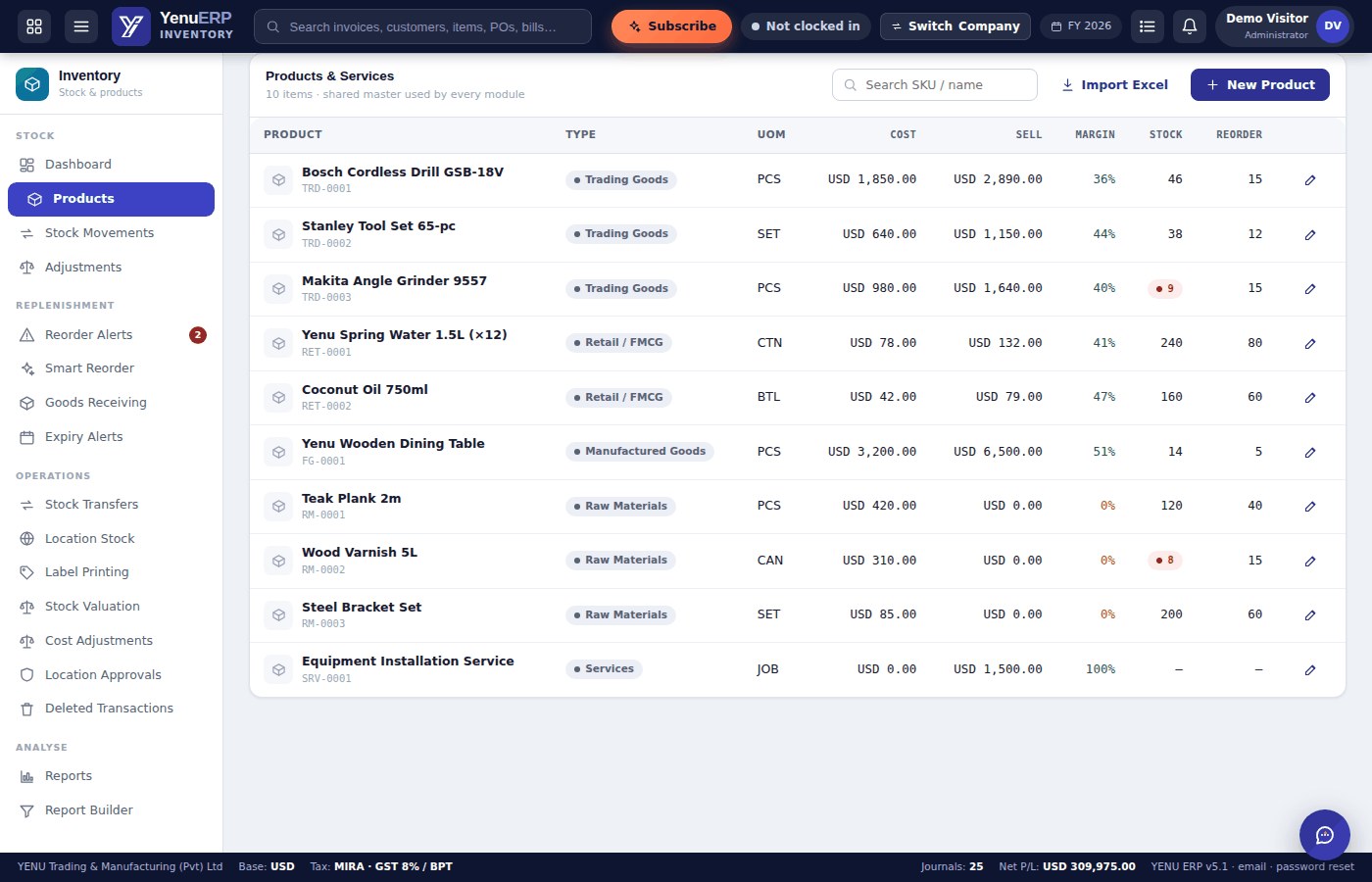
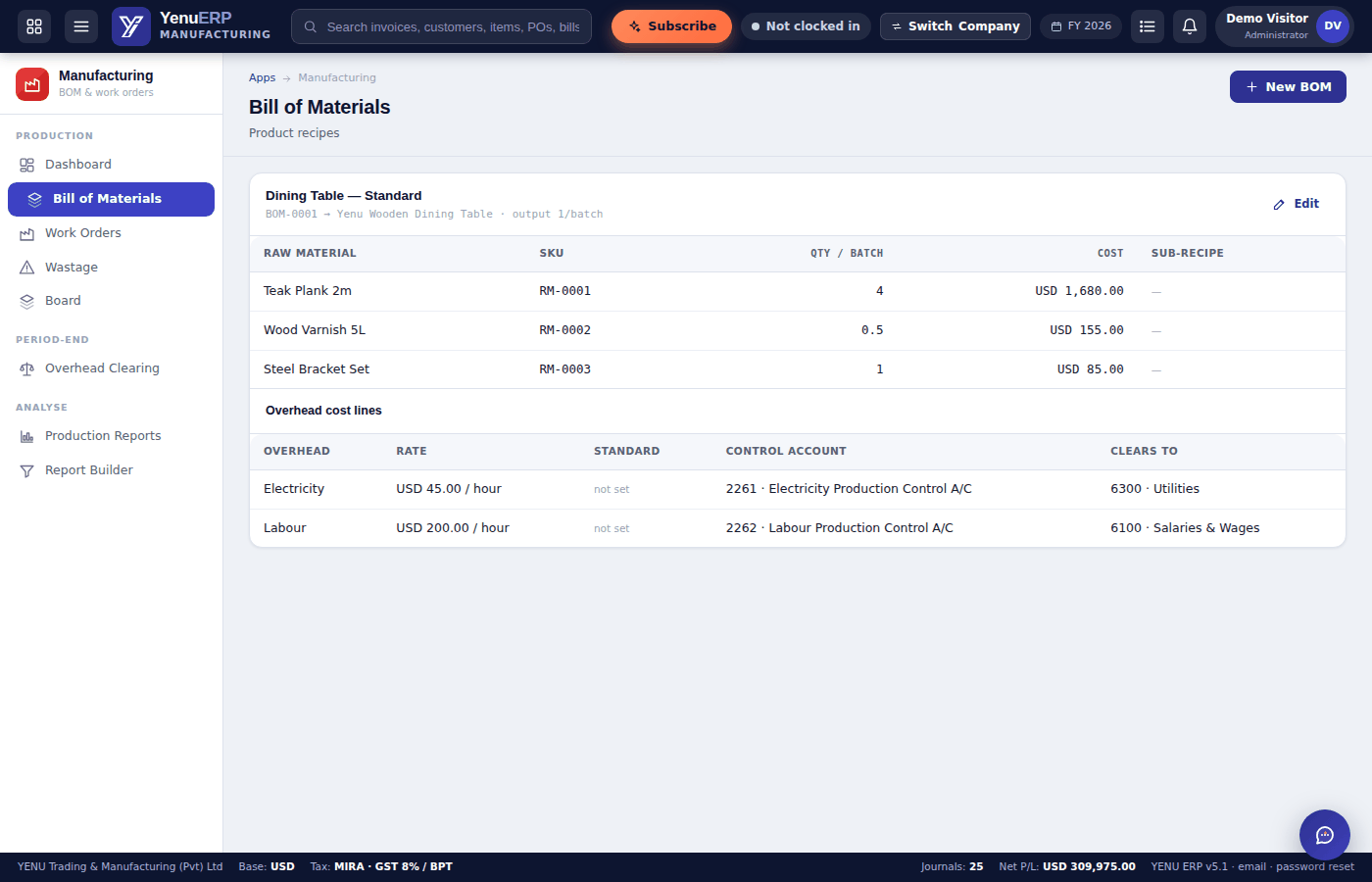
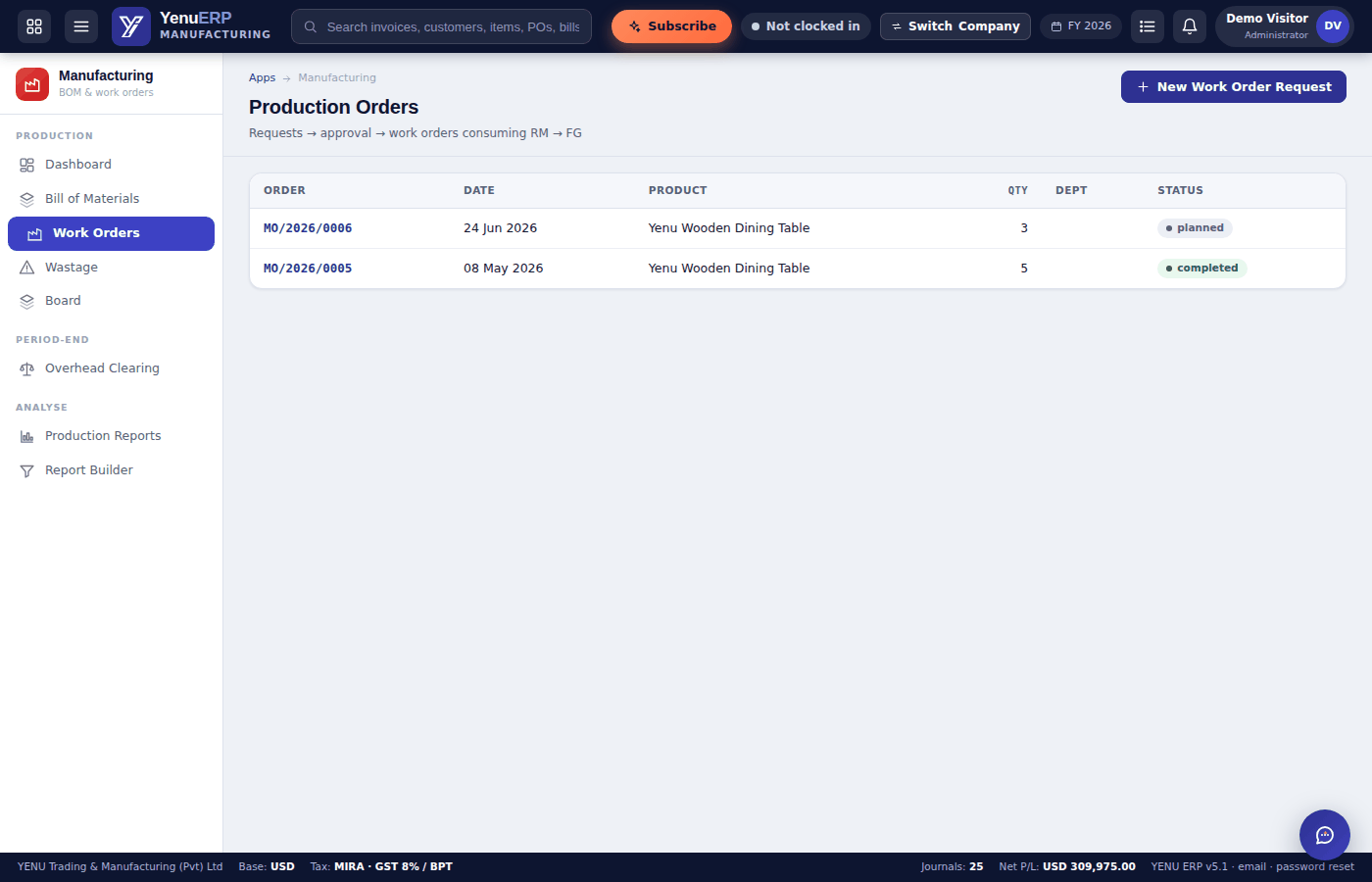
Bills of Materials and production orders for businesses that assemble or produce goods rather than just resell them.
Why it matters: know the real cost of what you make — raw materials in, finished goods out, tracked automatically against inventory.
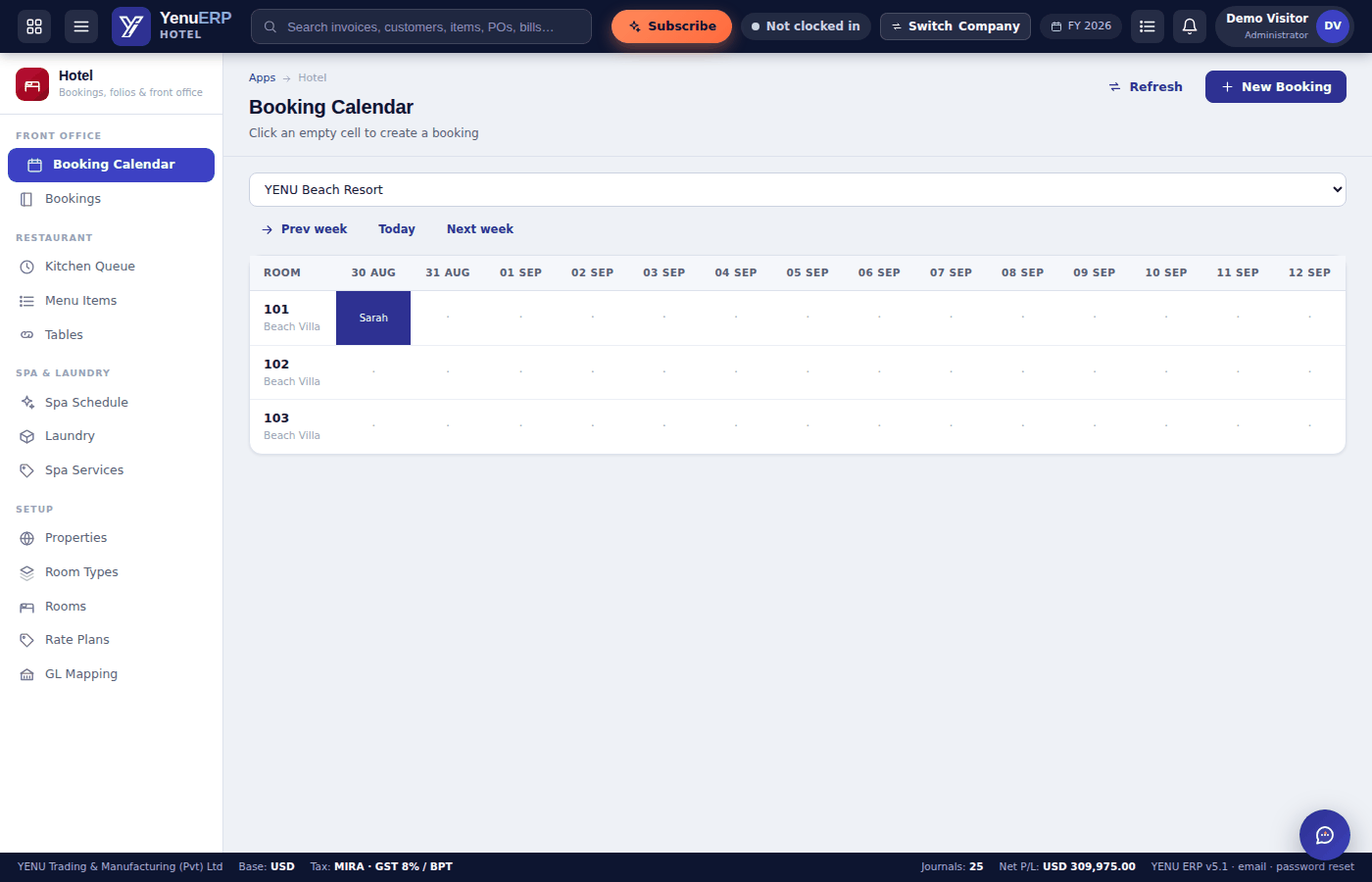
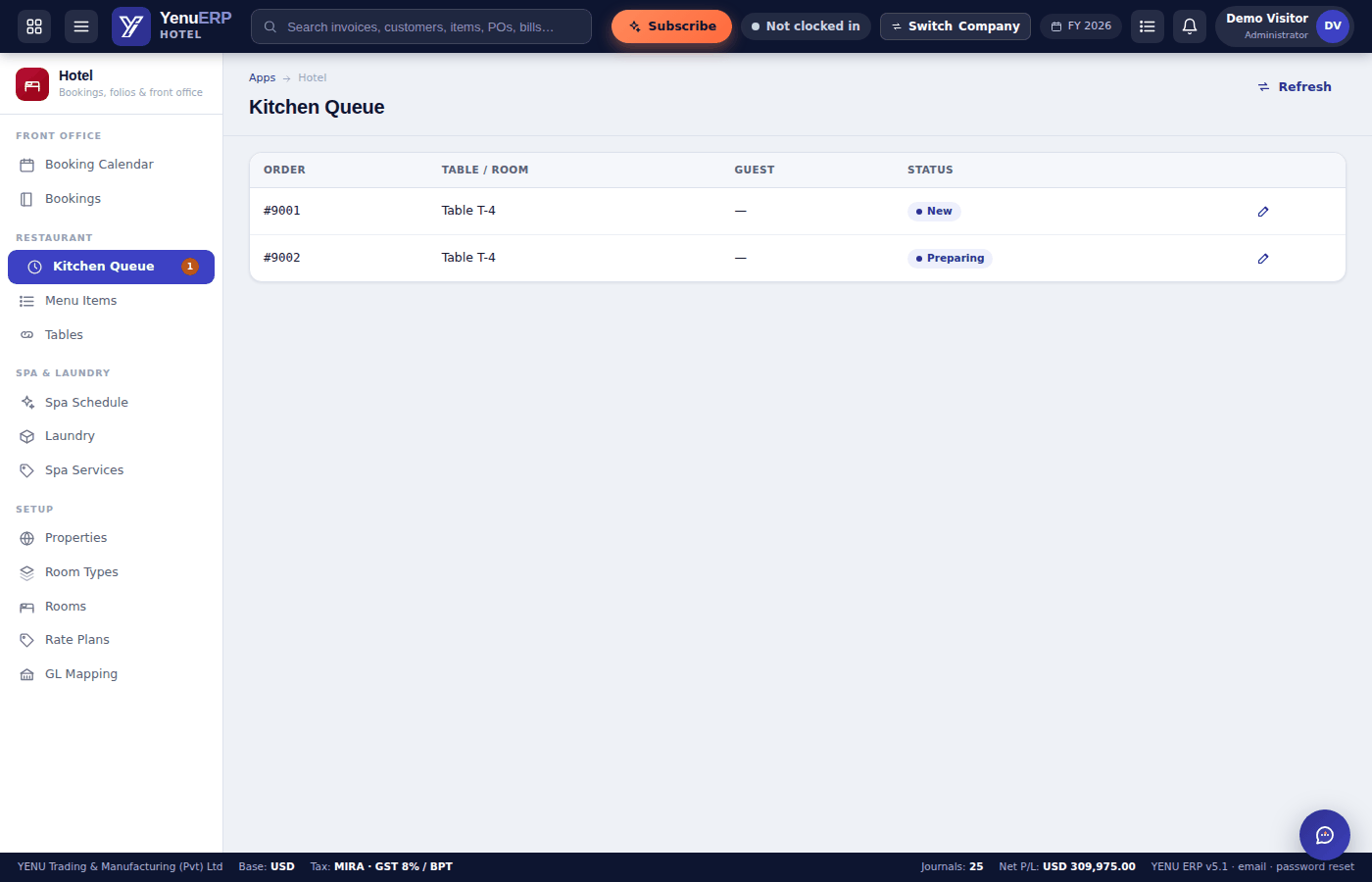
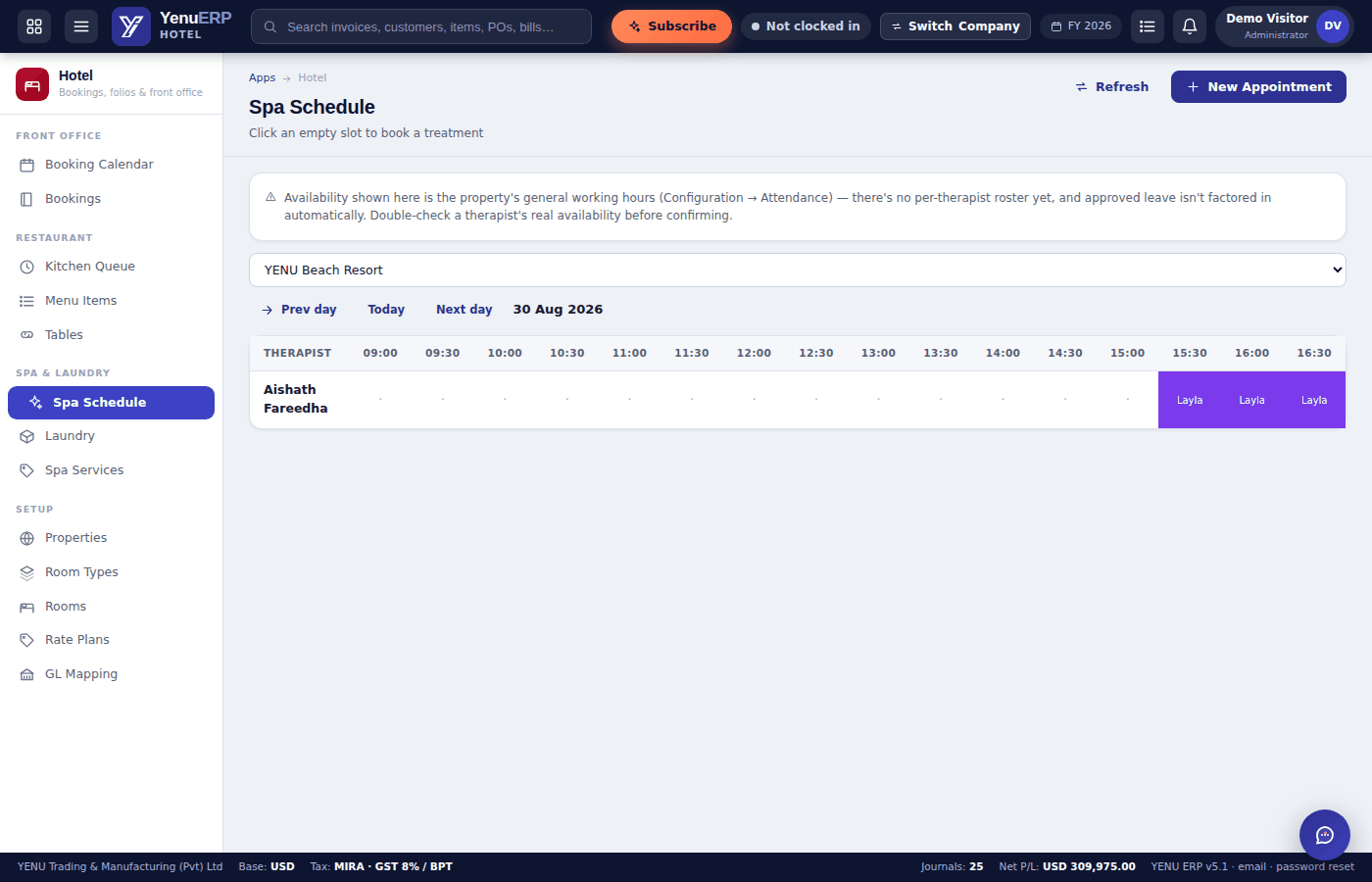
A booking calendar and guest folios for front office, restaurant orders taken by guests scanning a table's own QR code and routed straight to a kitchen queue, and spa & laundry scheduling that charges completed treatments back to the guest's room.
Why it matters: a small resort or guesthouse runs front desk, restaurant and spa as three separate habits today — one shared guest folio means a spa treatment or a dinner shows up on the same bill as the room, automatically.
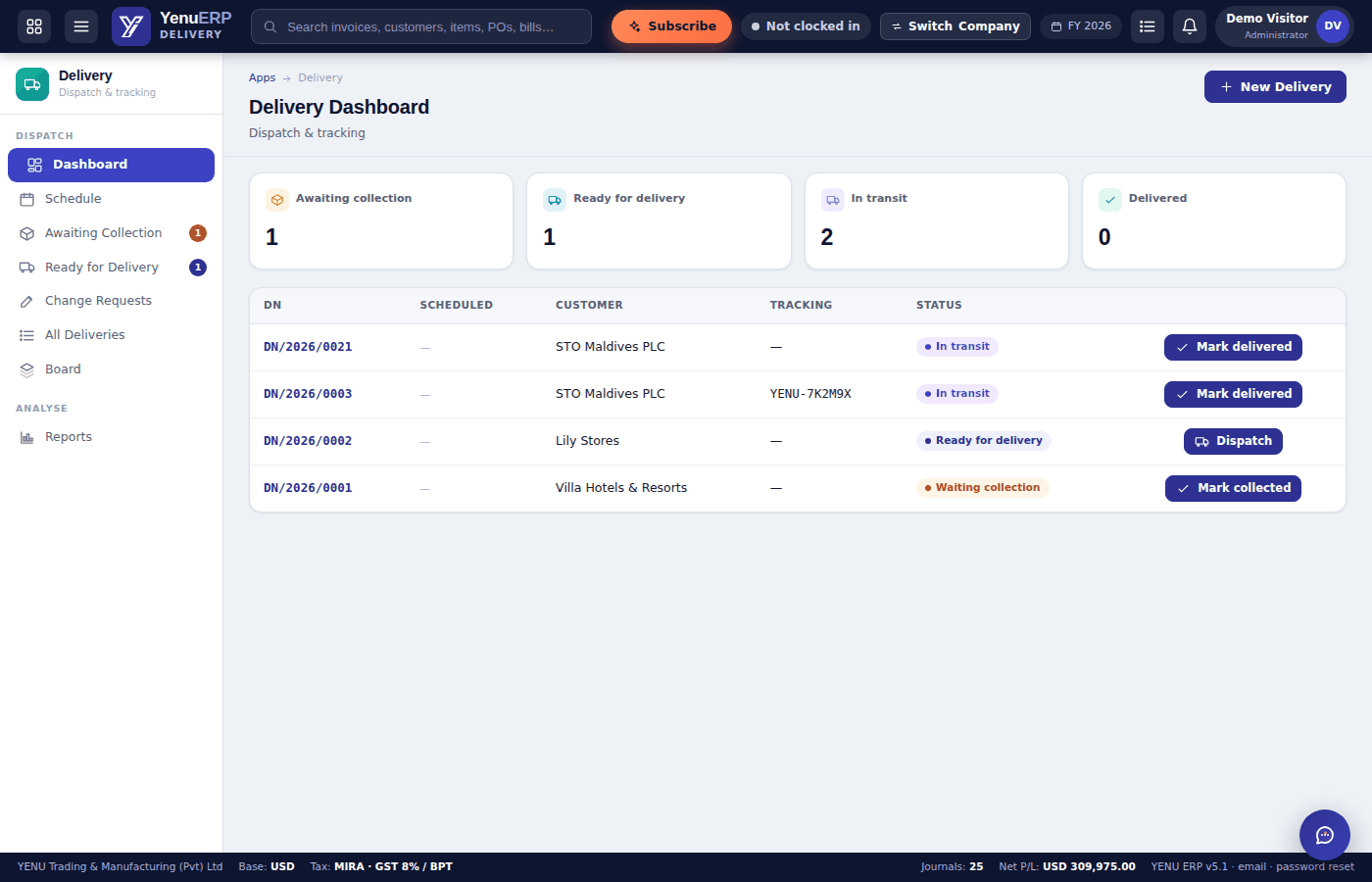
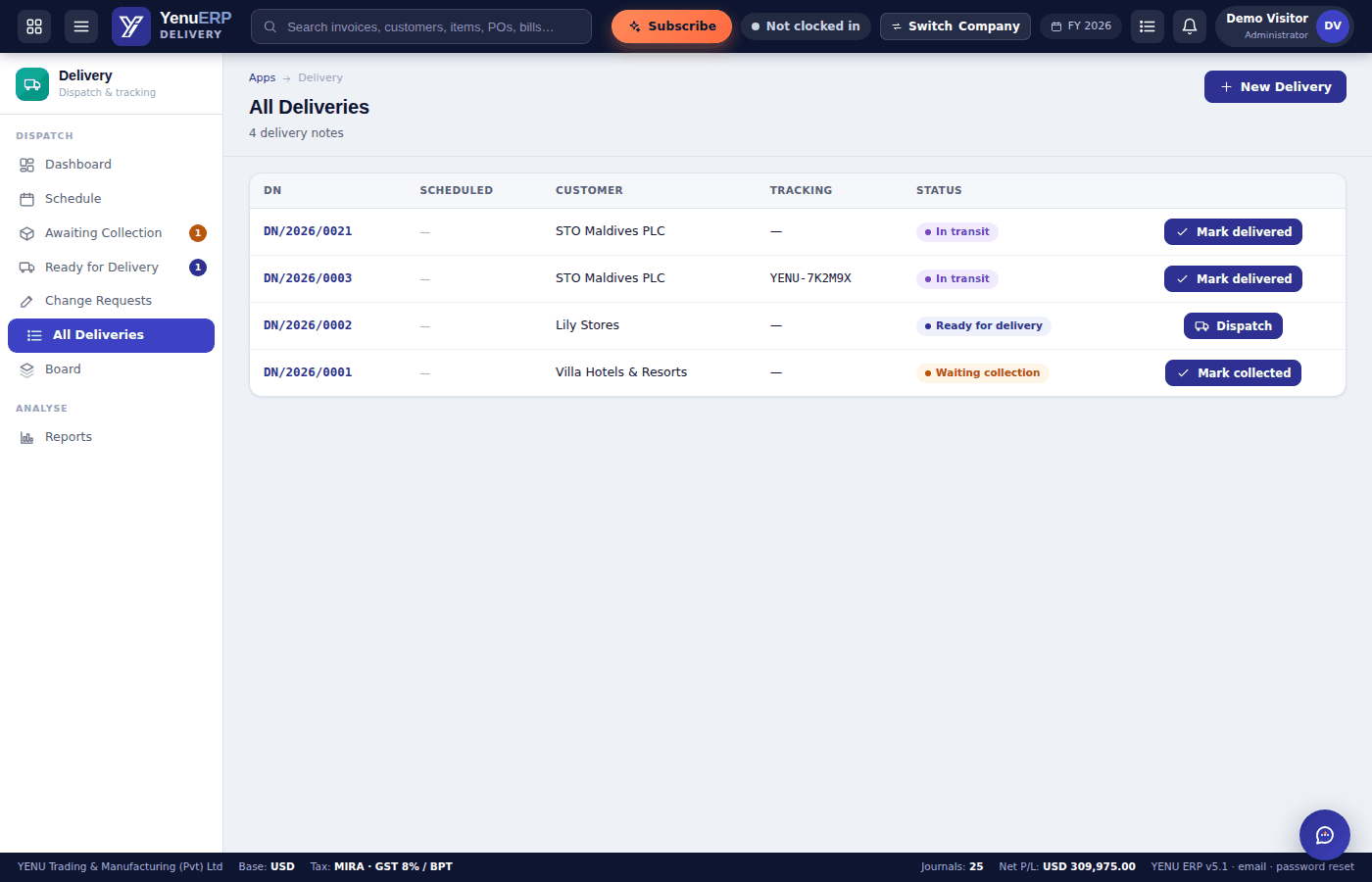
Delivery notes and tracking, linked straight to the original sales order.
Why it matters: a clear paper trail from "ordered" to "delivered" — useful the day a customer disputes what actually arrived.
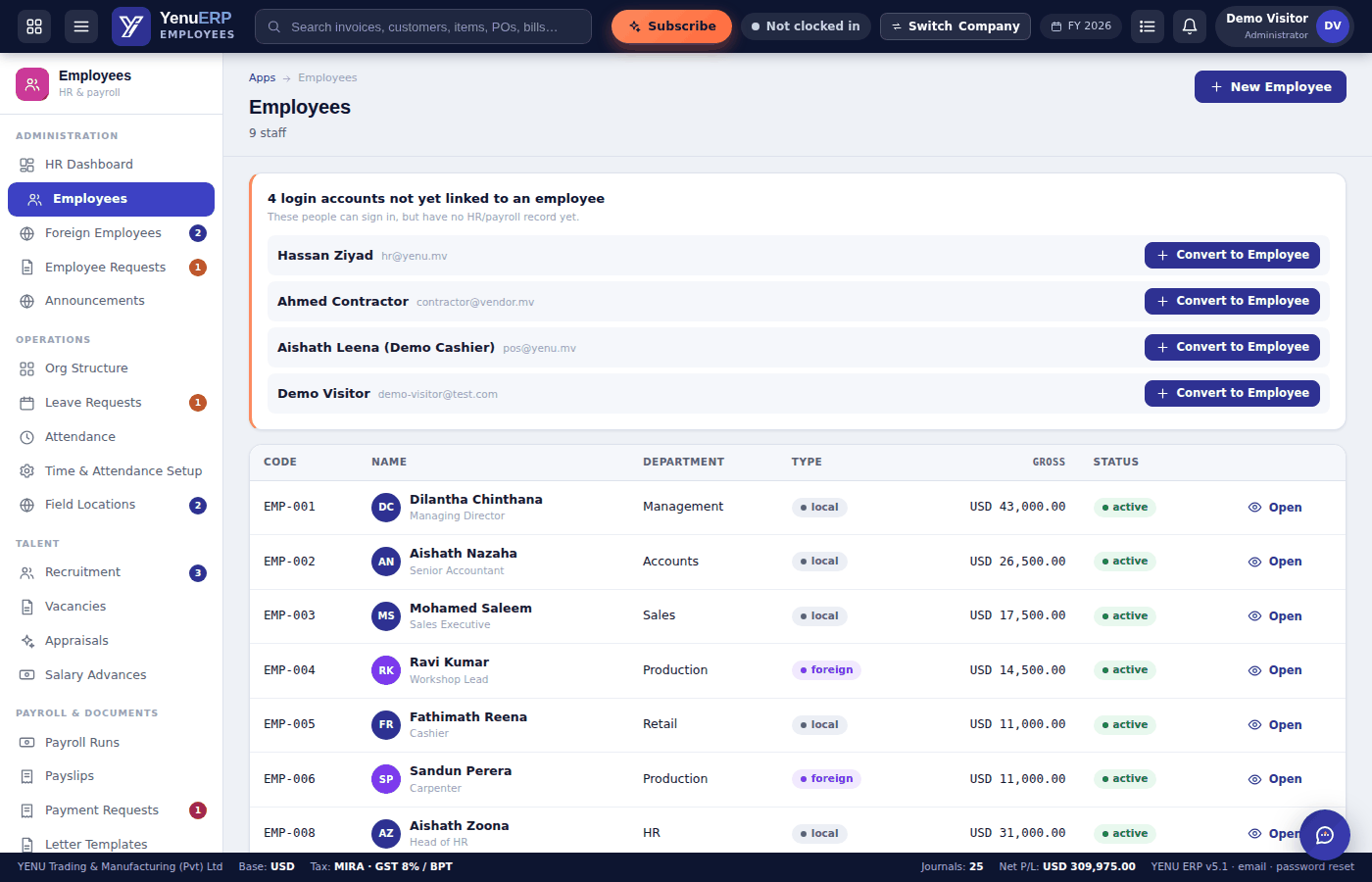
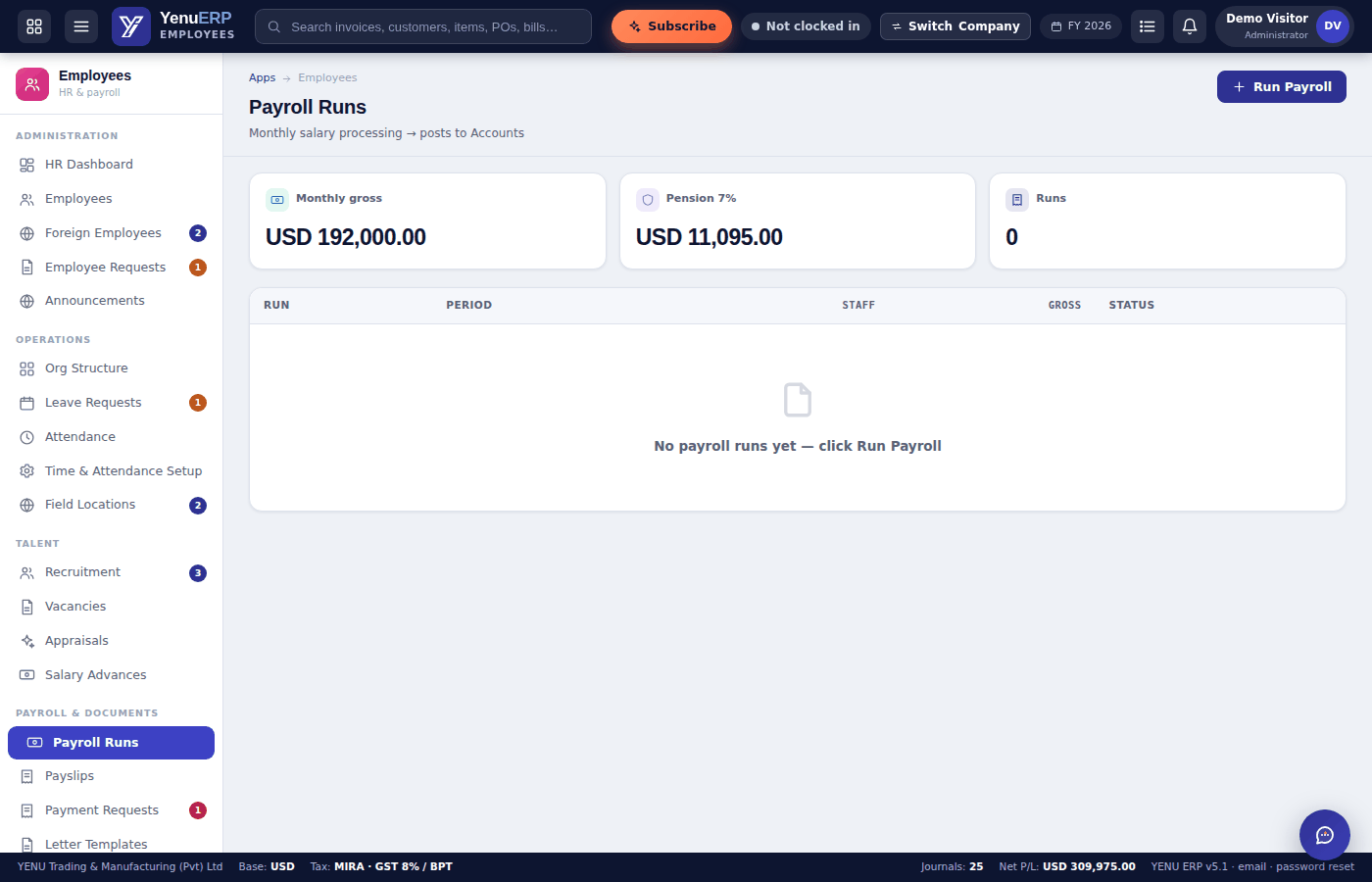
Employee records, leave requests & approvals, GPS-verified clock-in/out, payroll & payslips, and an org chart built automatically from who reports to whom. Staff get their own Self-Service portal for leave and payslips without needing to ask HR directly.
Why it matters: payroll and attendance disputes are one of the most common sources of staff friction in SMEs — a system both sides can see removes the guesswork.
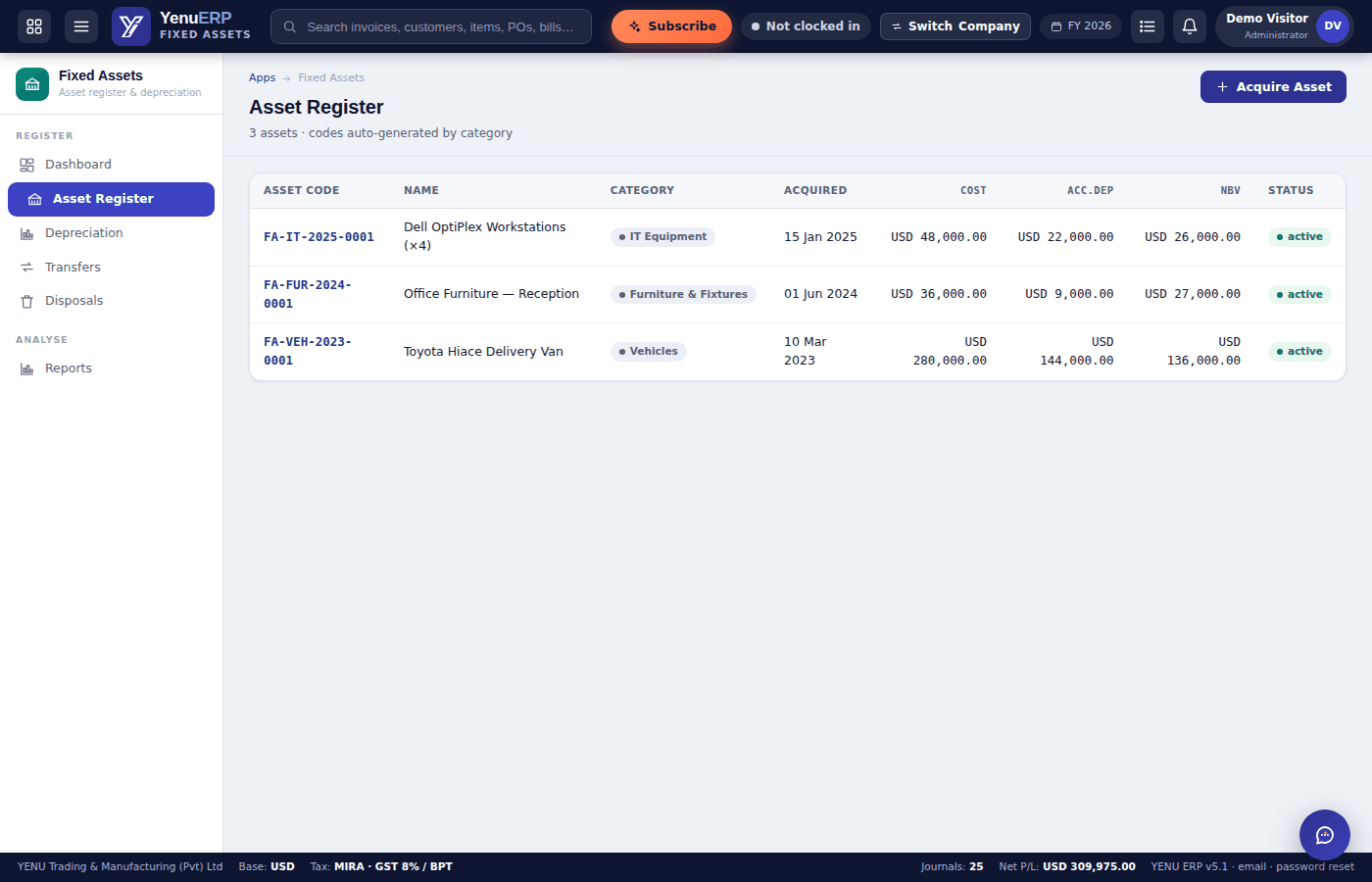
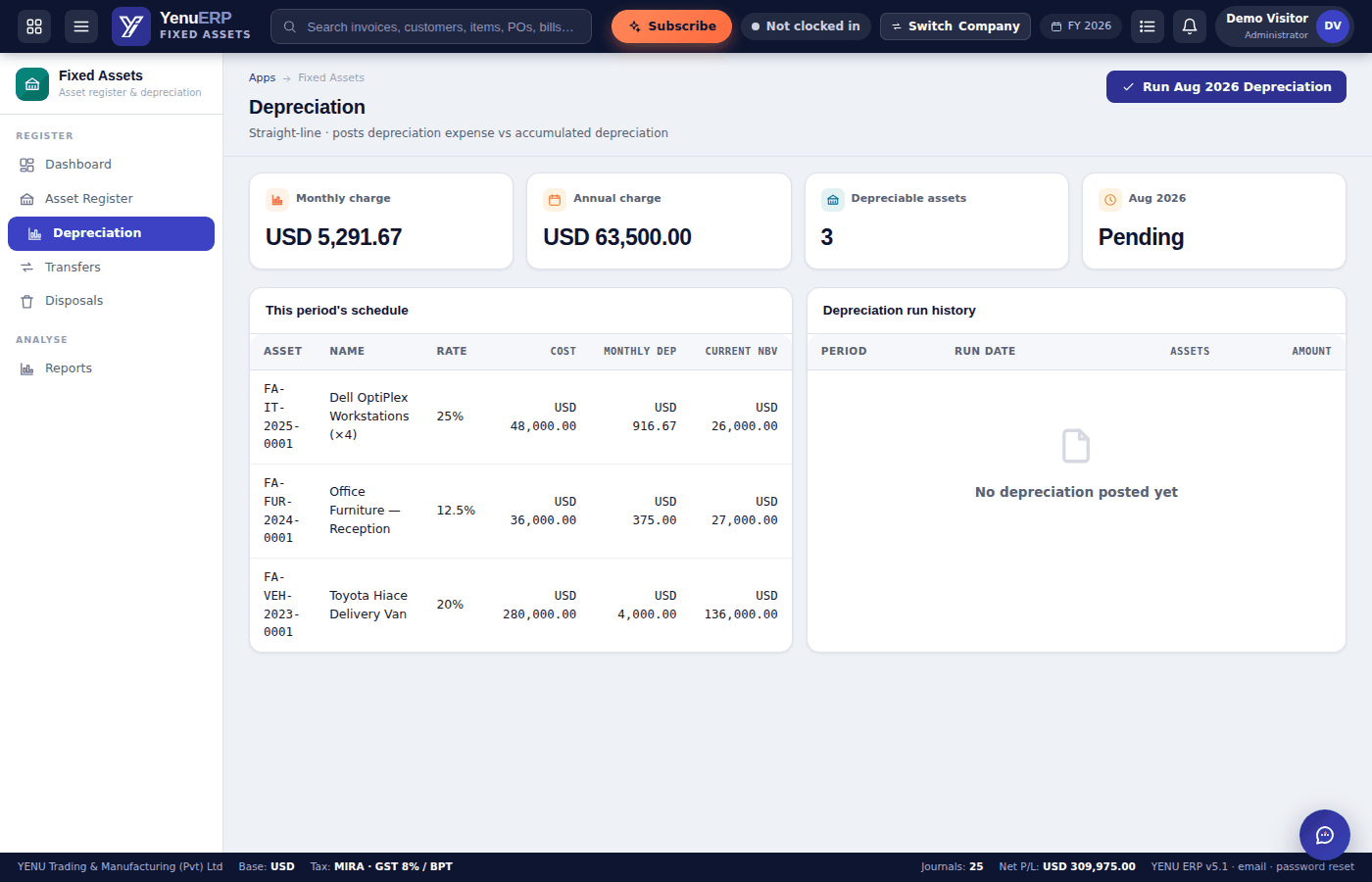
An asset register with automatic depreciation runs, plus approval-routed transfers and disposals.
Why it matters: depreciation is exactly the kind of recurring, easy-to-forget accounting task that a system should just handle for you every month.
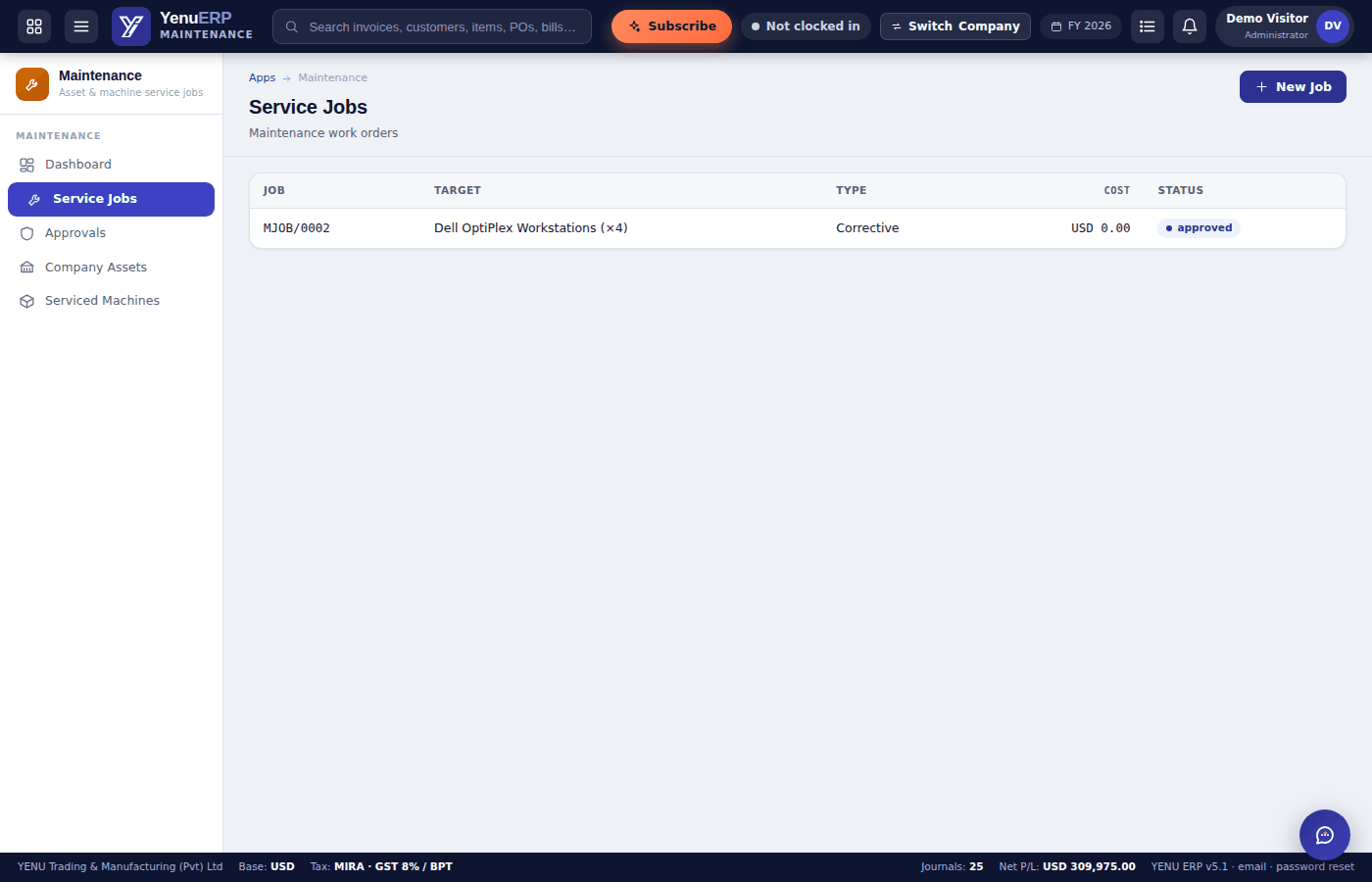
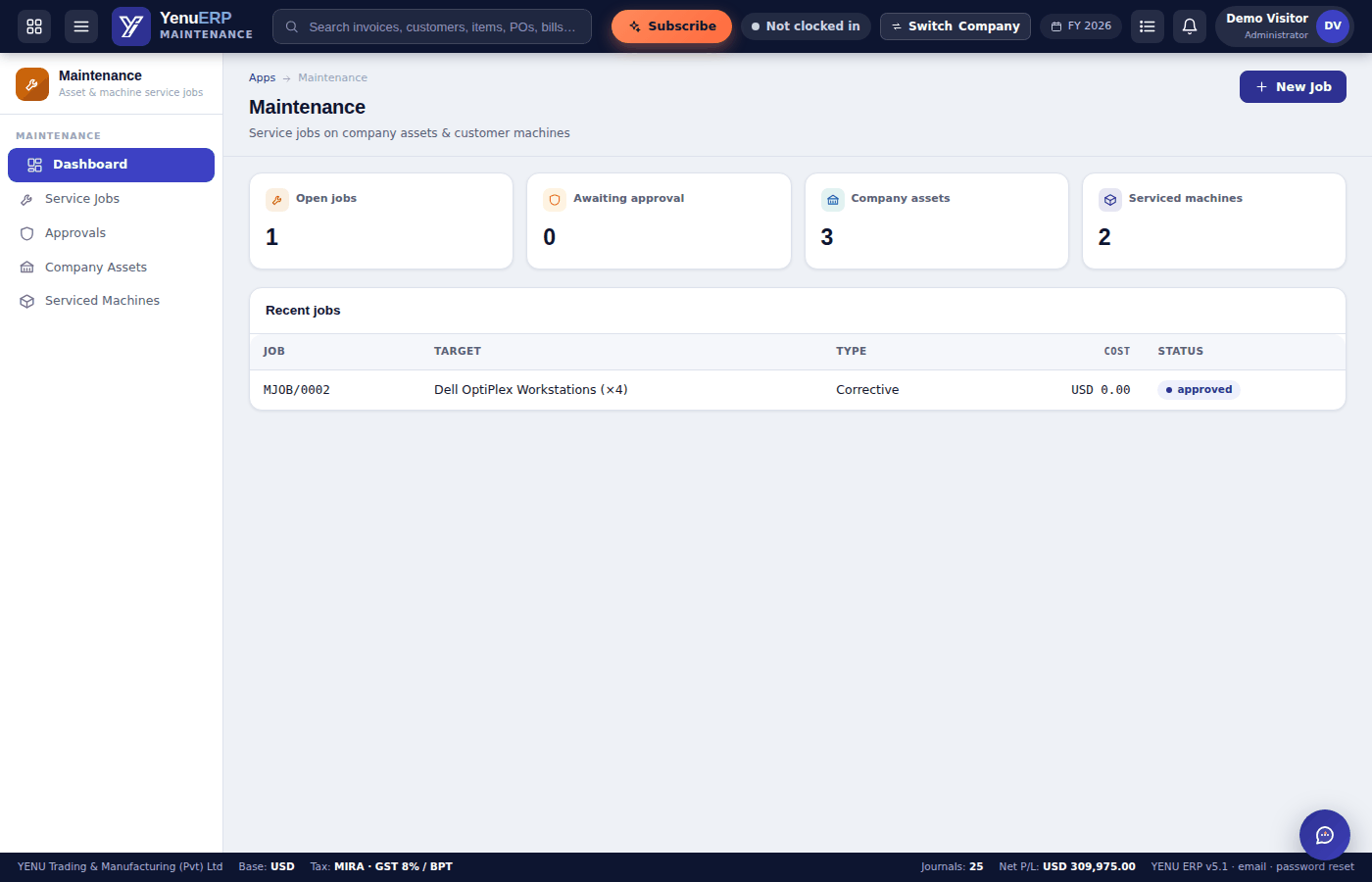
Track upkeep and servicing for equipment and assets, so nothing gets forgotten until it breaks.
Why it matters: a scheduled service is always cheaper than an emergency repair.
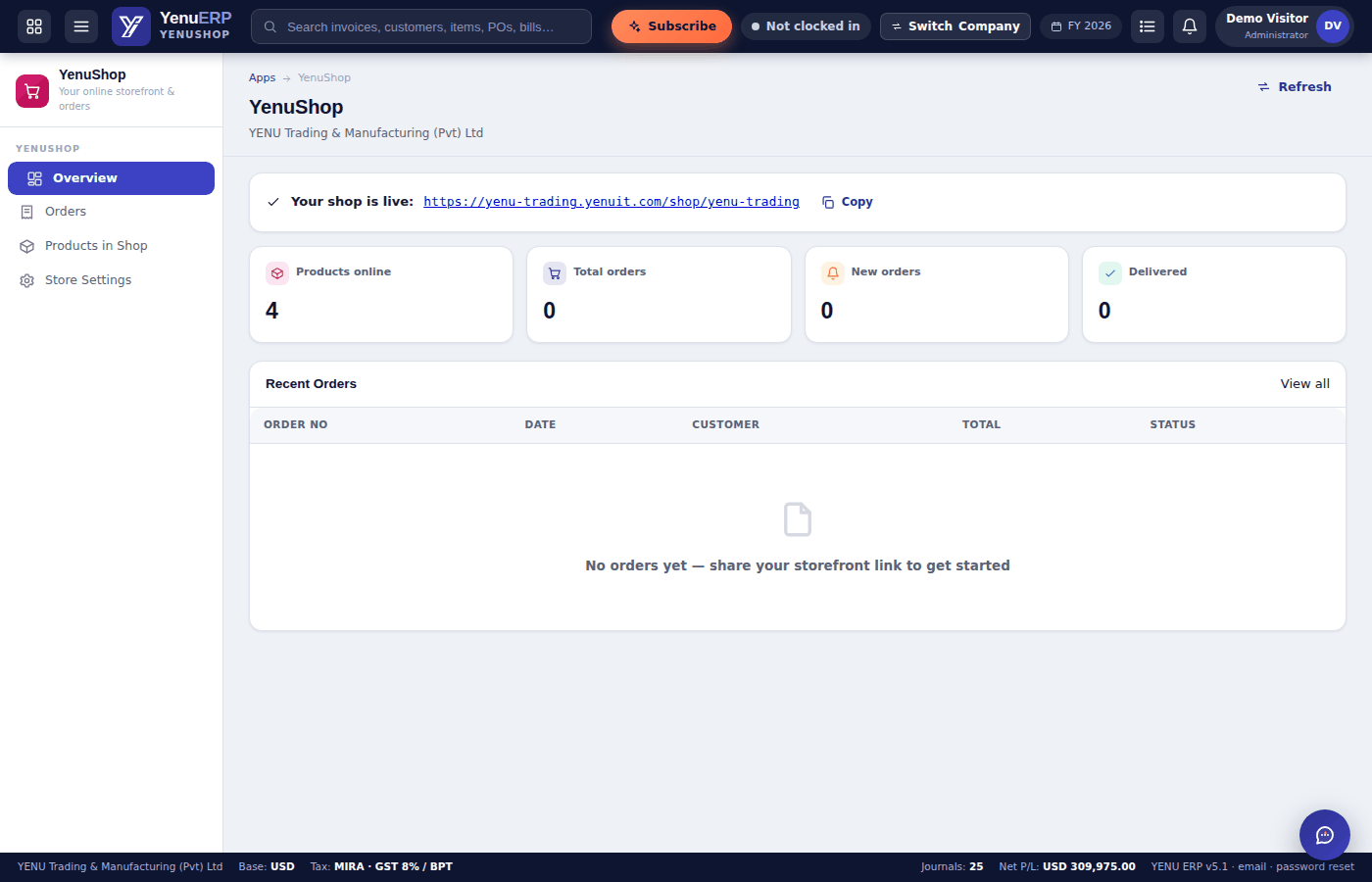
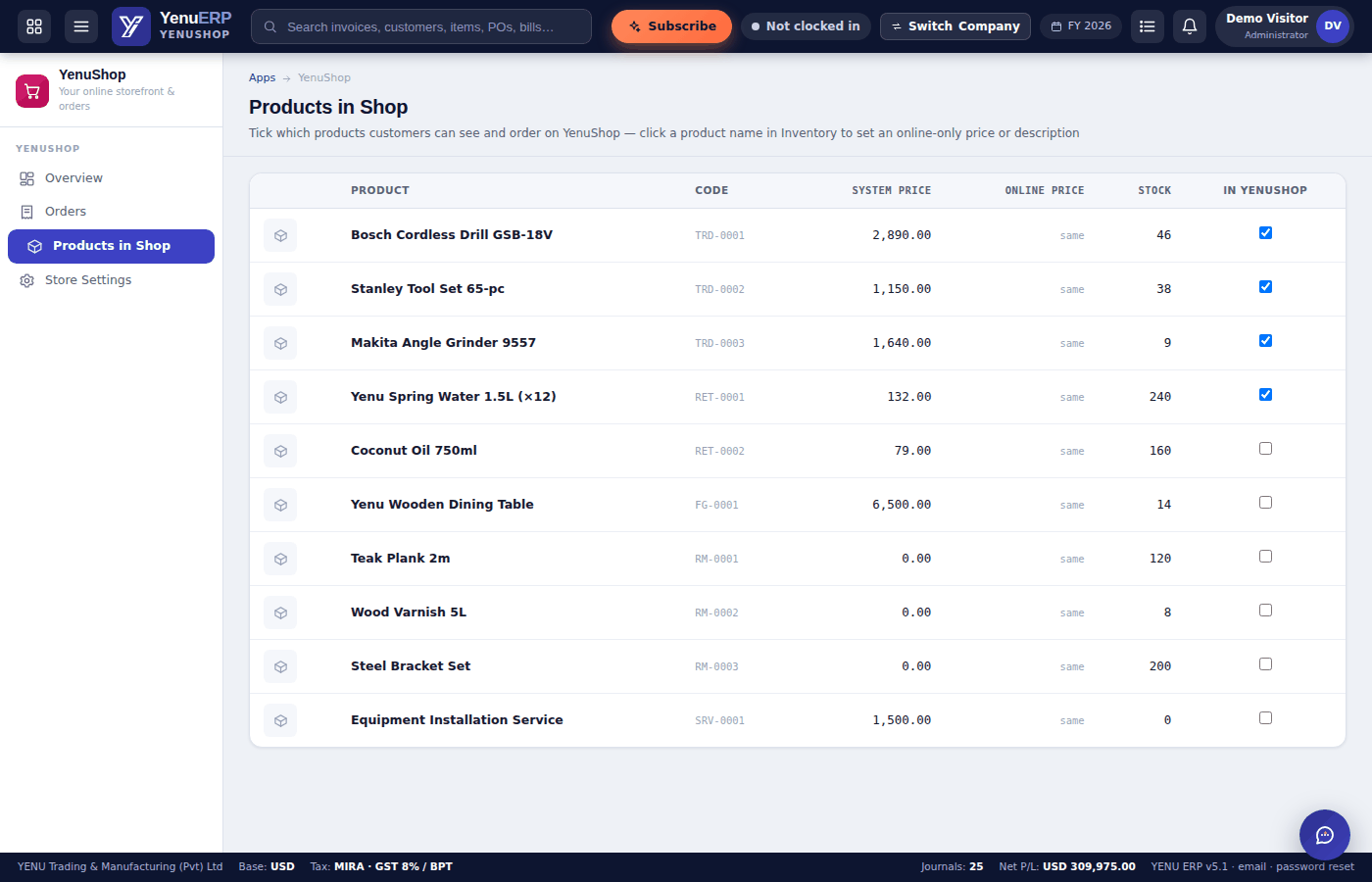
A public online storefront — a shareable link where customers browse the same product catalogue as your POS and place orders online, with cash on delivery, bank transfer or local payment QR codes.
Why it matters: your online orders land in the same inventory and customer records as everything else — no separate storefront platform to keep in sync by hand.
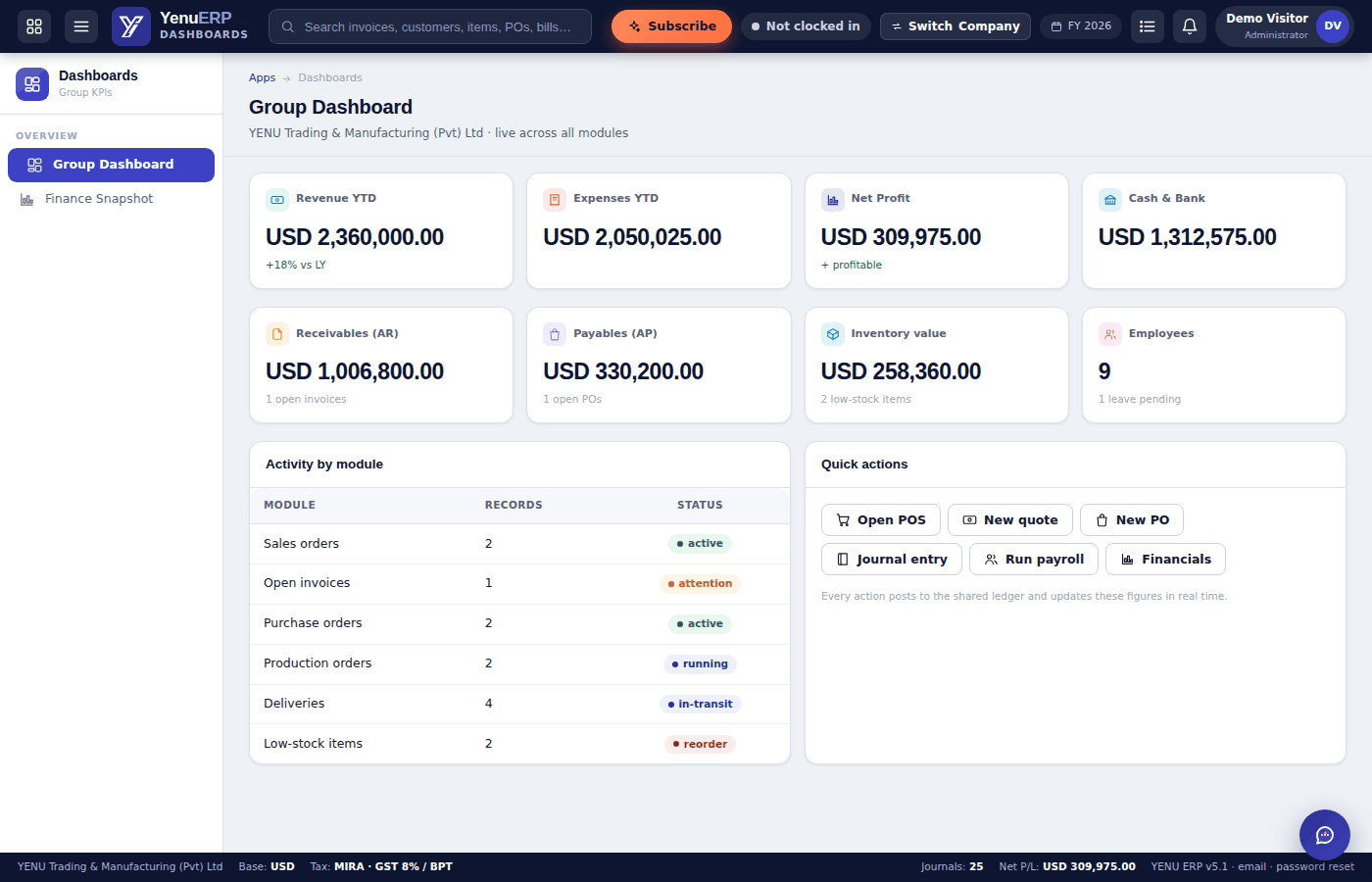
A group-level view across every module — revenue, cash, receivables, payables, inventory value and headcount, plus what's happening right now in sales, purchasing, production and delivery.
Why it matters: the numbers update the moment a sale, payment or delivery is recorded anywhere in the system — not the next time someone exports a spreadsheet.
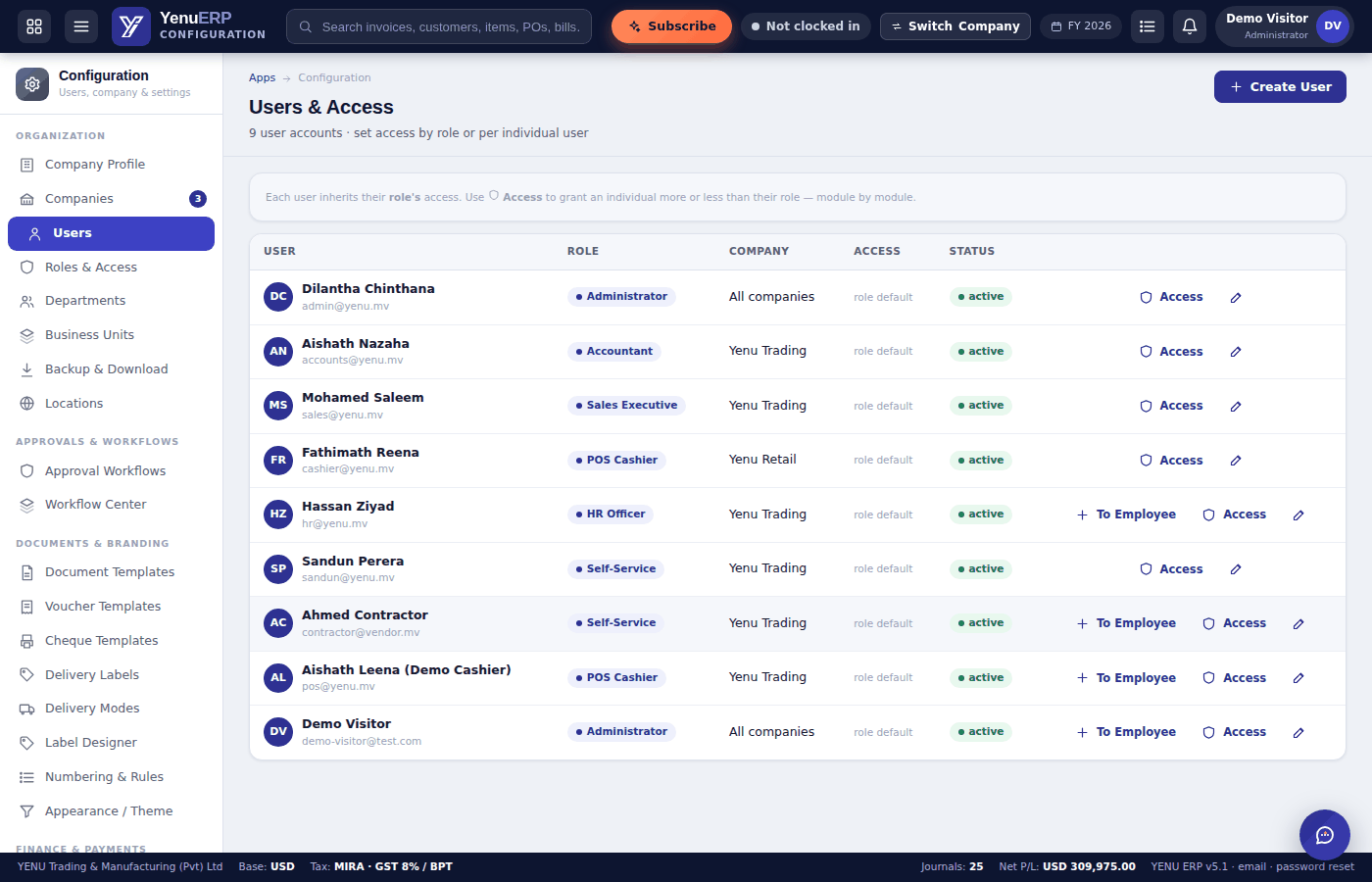
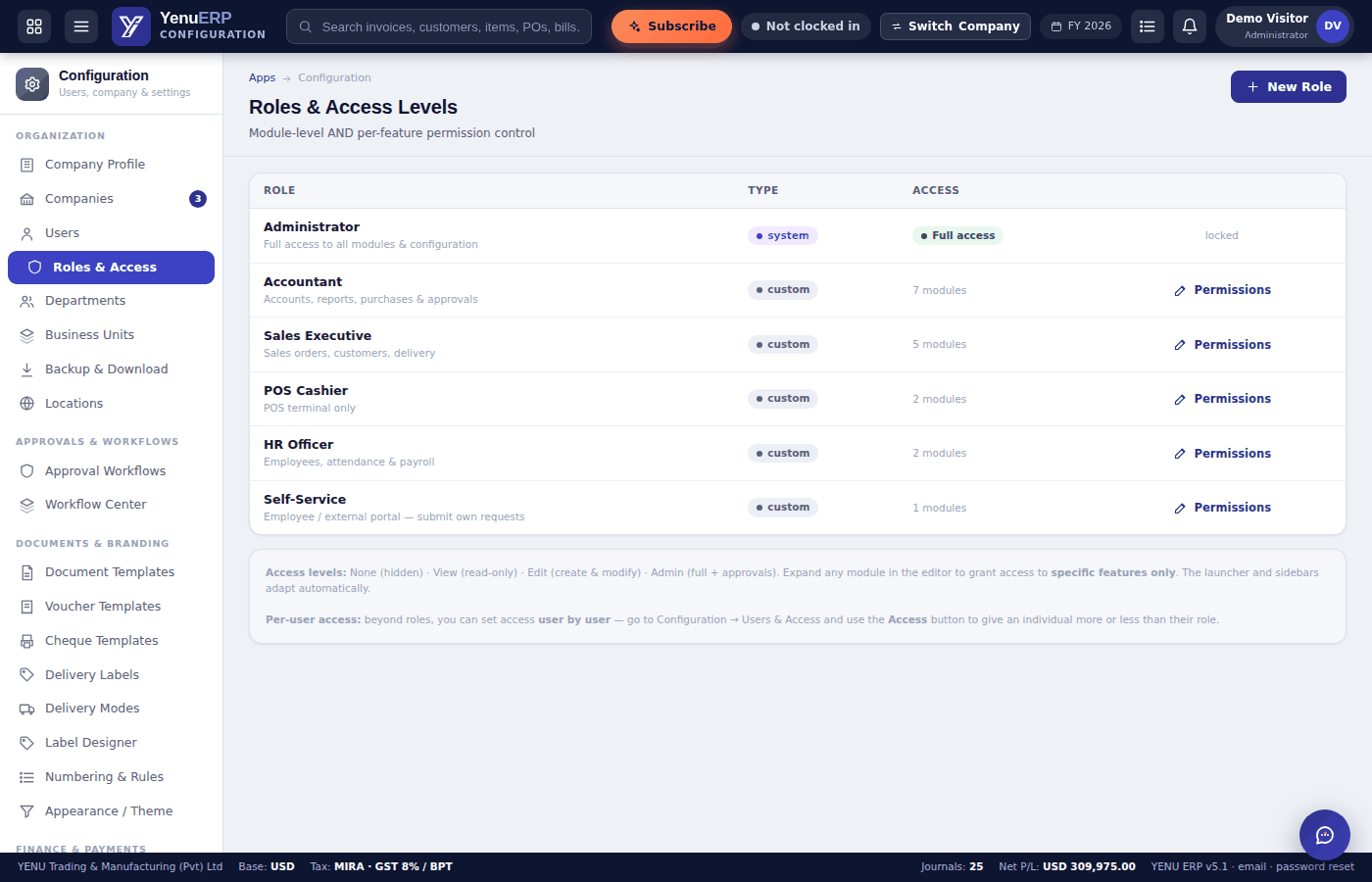
Company profile, currencies & FX, tax rates, fiscal year, item categories, and — the part most ERPs get wrong — genuinely flexible roles and per-user access. Multi-company mode lets each company under your group have its own separate admin login, sharing the same instance without sharing data.
Why it matters: as you grow past one person doing everything, you need to hand out access without handing out everything — this is where that gets set up.
Conditional, hierarchy-aware routing that follows a person's real reporting line — one inbox for payment approvals, leave requests, purchase requisitions, stock transfers and more. Most ERPs bolt this on as an afterthought; here it's built into the core.
Pick a plan, and your private YENU ERP instance is live in minutes — no IT project, no migration headache.
Get started